


The Hidden Cost of Waiting: Why "Reactive" Painting Drains Commercial Budgets

December 2, 2025

The "Invisible" Deterioration

In facility management, the squeaky wheel gets the grease. A broken HVAC unit or a leaking pipe demands immediate attention. Painting, however, is often silent. It deteriorates slowly—a scuff here, a hairline crack there, a slightly faded wall in the lobby.


Because this degradation is gradual, it is easy to ignore. But waiting until a building looks like it needs painting is a financial trap.


By the time paint failure is obvious to the naked eye, the underlying substrate may already be compromised, turning a simple cosmetic update into a costly repair project. This post explores why shifting to a preventive maintenance model is the smartest financial move a property manager can make.


The "Why": The Logic Behind Preventive Maintenance

Why should a company pay for painting when the walls still look "okay"? The answer lies in three key areas: Economics, Operations, and Psychology.


1. The Financial "Why": CapEx vs. OpEx

Large-scale repainting projects usually hit the Capital Expenditure (CapEx) budget hard every 5-7 years. These are massive, spiked costs that are hard to get approved.

A maintenance plan shifts this to a predictable Operating Expense (OpEx). You pay a fraction of the cost annually to maintain the coating.

  • The Math: Touching up 10% of a high-traffic corridor annually is significantly cheaper than prepping, priming, and coating 100% of that corridor every five years because you avoid the heavy labor costs of sanding down damaged drywall.


2. The Operational "Why": Zero Downtime

When you wait five years to repaint, the job becomes a construction project. You have to close wings, move furniture, and disrupt tenants for weeks.

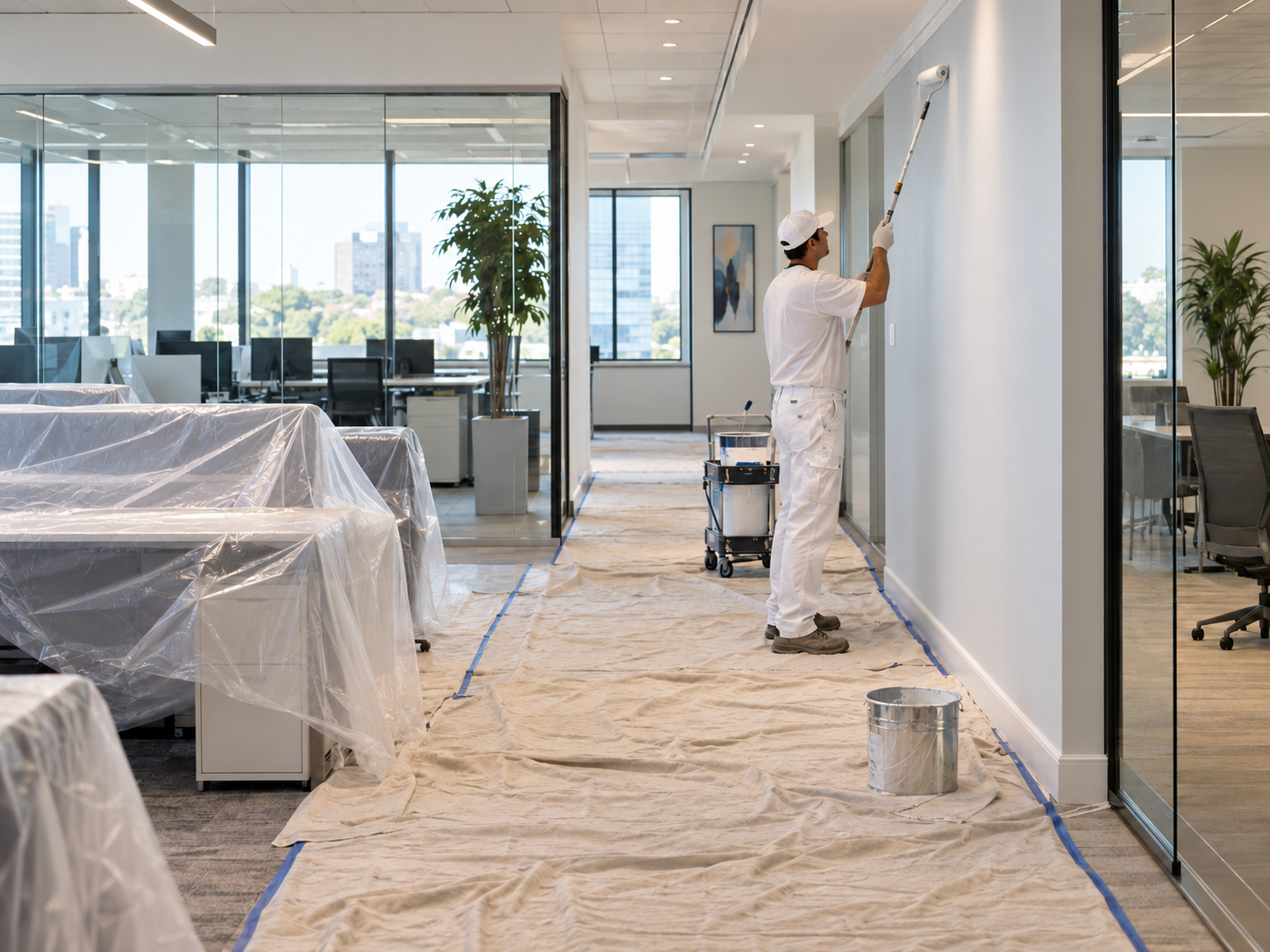
Maintenance is surgical. It targets specific high-wear areas (door frames, corners, elevator banks) and is often completed off-hours with zero impact on daily business operations.


3. The Psychological "Why": The Broken Window Theory

In commercial real estate, perception is value. There is a concept known as the "Broken Window Theory"—visible signs of neglect encourage further neglect.

  • If a tenant sees scuffed walls in the elevator, they subconsciously value the building less.
  • If the environment is pristine, occupants treat the space with more respect, actually reducing future wear and tear.

Self-Assessment: Does Your Facility Need a Plan?

Not every building needs a formal plan. However, if you manage a high-traffic commercial space, use this checklist to see if you are falling behind.


Walk your facility today and check for these signs:

  • The "Shoulder Height" Test: Look at your hallways. Is there a visible "scuff line" at hip or shoulder height from bags and shoulders rubbing against the wall?
  • The Corner Check: Are the metal corner guards intact, or is the drywall around outside corners chipped and exposed?
  • The Lobby Sunlight Test: Look at walls facing windows. Is the paint chalking or fading compared to the interior walls?
  • The "Touch-Up" Map: Do you see mismatched patches of paint where someone tried to fix a spot with the wrong sheen or color batch?

If you answered "Yes" to two or more of these, you are currently in a "Reactive" cycle.

How CPI Implementation Works

At CPI, we act as your facility partner, not just a vendor. We help you build the strategy before we ever open a paint can.

  1. The Assessment: We conduct a full site audit to categorize your zones (A, B, and C).
  2. The Forecast: We provide a multi-year budget projection so you know exactly what your painting spend will be in 2025, 2026, and beyond.
  3. The Execution: We schedule maintenance during your downtime—nights, weekends, or holidays—to ensure your business never stops.

Stop Reacting. Start Planning.

Your building is likely your company's second-largest asset. Don't let it depreciate simply because the maintenance schedule is reactive.


Are you ready to flatten your budget and improve your facility's image?

Contact Us

Exterior view featuring a two-tone stucco and stone veneer
January 13, 2026
managing a large-scale apartment repaint doesn't have to be a headache. See our proven 7-step process for minimizing disruption and maximizing transparency.
Pro-Industrial Waterbased Epoxy
January 5, 2026
Pro-Industrial Waterbased Epoxy creates a chemical-resistant surface where rust simply wipes away.
December 16, 2025
Graffiti on a commercial property is more than just a nuisance—it’s a signal.
Freshly painted exterior of apartment complex at San Jose by Commercial Painting Inc
December 9, 2025
Boost tenant retention with professional exterior painting. See our latest transformation at 3218 Impala Dr. in San Jose and learn how maintenance adds value.
November 17, 2025
Here in the Bay Area , our buildings face a unique set of challenges. From the persistent fog and moisture in the city to the strong sun in the valleys, our properties are in a constant battle with the elements. It’s easy to look at the resulting peeling paint, a dirty facade, or a small spot of rust as a cosmetic problem—something to "clean up" when you have the time or budget. At Commercial Painting Inc., we’ve seen what happens when "upkeep" is put off. That small rust spot becomes a major corrosion problem. That peeling paint lets moisture in, damaging the material underneath. What was a simple maintenance task becomes a costly, large-scale repair. This is why we believe maintenance matters. We're passionate about making the Bay Area prettier through paint, but we know "pretty" doesn't last unless it's built on a strong foundation.
November 11, 2025
CPI restores water-damaged drywall in San Jose with expert patching, sealing, and repainting to protect walls and achieve a smooth finish.
Show More