

Rain & Commercial Buildings: How Moisture Causes Paint Failure

February 20, 2026

When the rainy season hits, most commercial property owners focus on roofing and drainage systems. However, one critical area often overlooked is the building’s exterior coating system.


Exterior paint is more than an aesthetic choice—it is a functional, protective barrier. When moisture penetrates that barrier, it triggers a chain reaction of coating failure, substrate damage, and unplanned capital expenses. For property managers and facility directors, preventative exterior maintenance during rainy months is the most effective way to reduce long-term repair costs.

Why Moisture Is the #1 Cause of Exterior Paint Failure

Commercial coatings are engineered to resist harsh weather, but no system can perform if water enters from behind the film. Common failure points include:


  • Deteriorated Caulking: Failed sealants at expansion joints allow water to bypass the paint.
  • Substrate Cracks: Hairline cracks in stucco or EIFS act as straws, pulling moisture inward.
  • Unsealed Penetrations: Gaps around conduit, vents, and fasteners.
  • Failed Window Seals: Water pooling at frames that seeps into the wall cavity.


Once water infiltrates the substrate, it leads to blistering, delamination (peeling), efflorescence staining, and structural wood rot. At this stage, a minor touch-up evolves into a massive restoration project.


Why the Rainy Season is the Best Time for a Facility Audit

Many property managers assume exterior work must wait until summer. However, the rainy season is when vulnerabilities become visible. Active leak paths, water stains, and bubbling paint provide real-time evidence of where your building is failing. Identifying these issues now allows you to stabilize the building envelope before peak heat and UV exposure return in the summer months.


Exterior Paint as Part of Risk Management

For commercial facilities, exterior maintenance is a form of asset protection. Proactive repairs help:

  • Protect structural components (rebar, wood, drywall).
  • Preserve tenant satisfaction and "curb appeal."
  • Reduce liability exposure from falling debris or mold.
  • Improve long-term capital planning.

Plan Ahead Before Small Issues Escalate

If your property hasn’t had a recent exterior assessment, the rain season is the ideal time to identify weak points. A strategic walkthrough today prevents a major restoration tomorrow.

Schedule a Commercial Exterior Assessment


Commercial Painting Inc. provides preventative maintenance inspections and targeted repair services designed specifically for large-scale facilities.

Contact Us

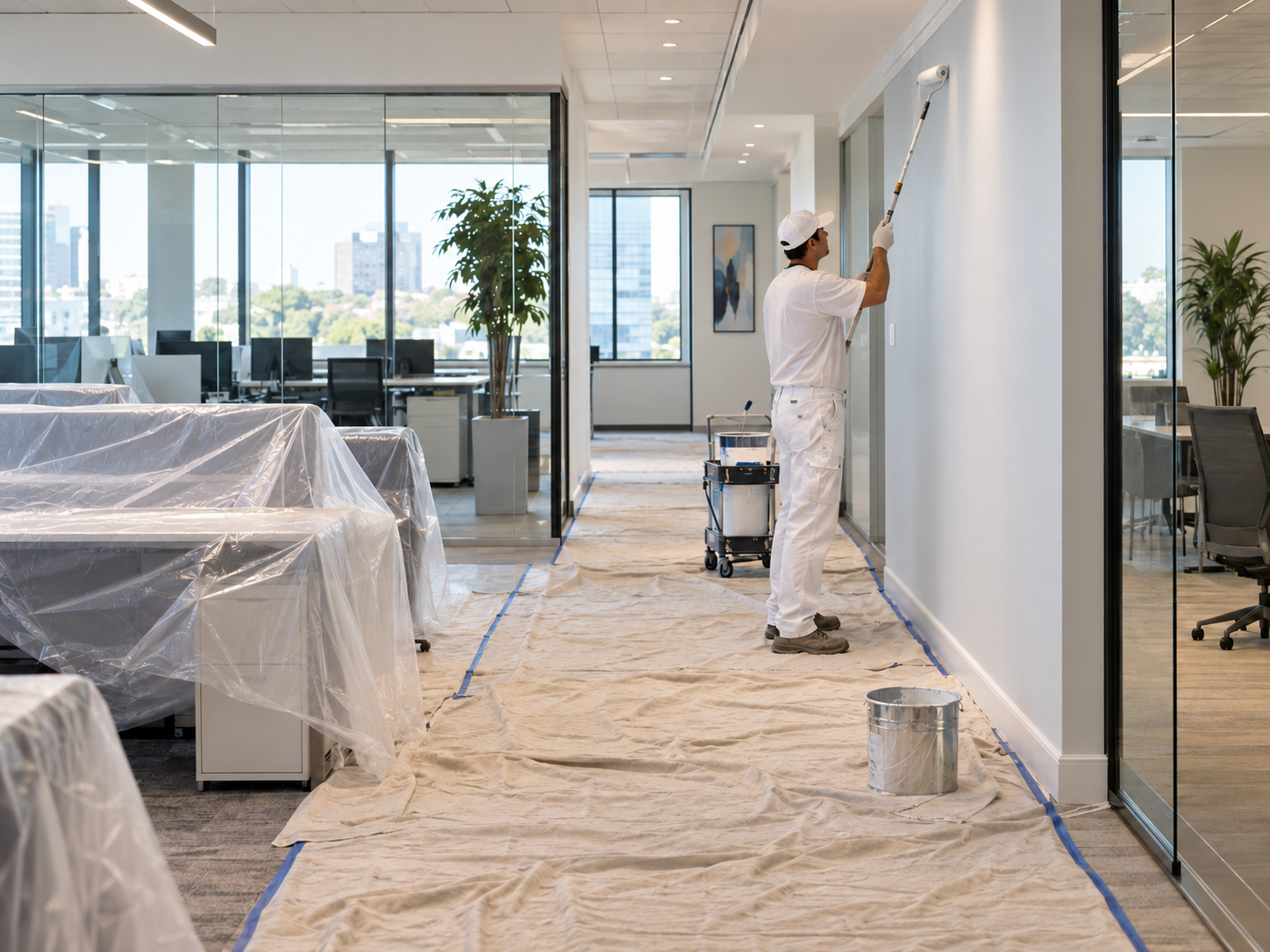
Professional painters applying scuff-resistant paint in a modern commercial office hallway to create
July 9, 2026
Discover how scuff-resistant paint like Scuff-X helps protect high-traffic office hallways, reduces maintenance costs, and keeps commercial interiors looking new.
Aerial view of a commercial flat roof
July 2, 2026
Learn how cool roof coatings reduce heat absorption, lower HVAC costs, extend roof life, and improve building sustainability. Discover if a cool roof is right for your commercial property.
June 25, 2026
Compare epoxy flooring and polished concrete for warehouses, manufacturing facilities, and industrial buildings. Learn which option offers better durability, maintenance costs, and long-term ROI.
June 18, 2026
Learn how color-coded warehouse line striping helps prevent trip hazards, improves OSHA compliance, reduces workplace injuries, and creates safer, more efficient facilities.
June 11, 2026
Learn why EPA Lead RRP certification is essential in commercial painting. Protect tenants, workers, and property while staying compliant with federal lead-safe regulations.
Facility manager reviewing contractor plans to prevent operational downtime during a commercial proj
June 4, 2026
Learn the 7 critical questions facility managers should ask contractors to prevent operational downtime and maintain business continuity during projects.
Show More