

Why We Use Air Scrubbers for Commercial Painting Projects

Air Scrubbers for Painting Projects: Why Indoor Air Quality Matters
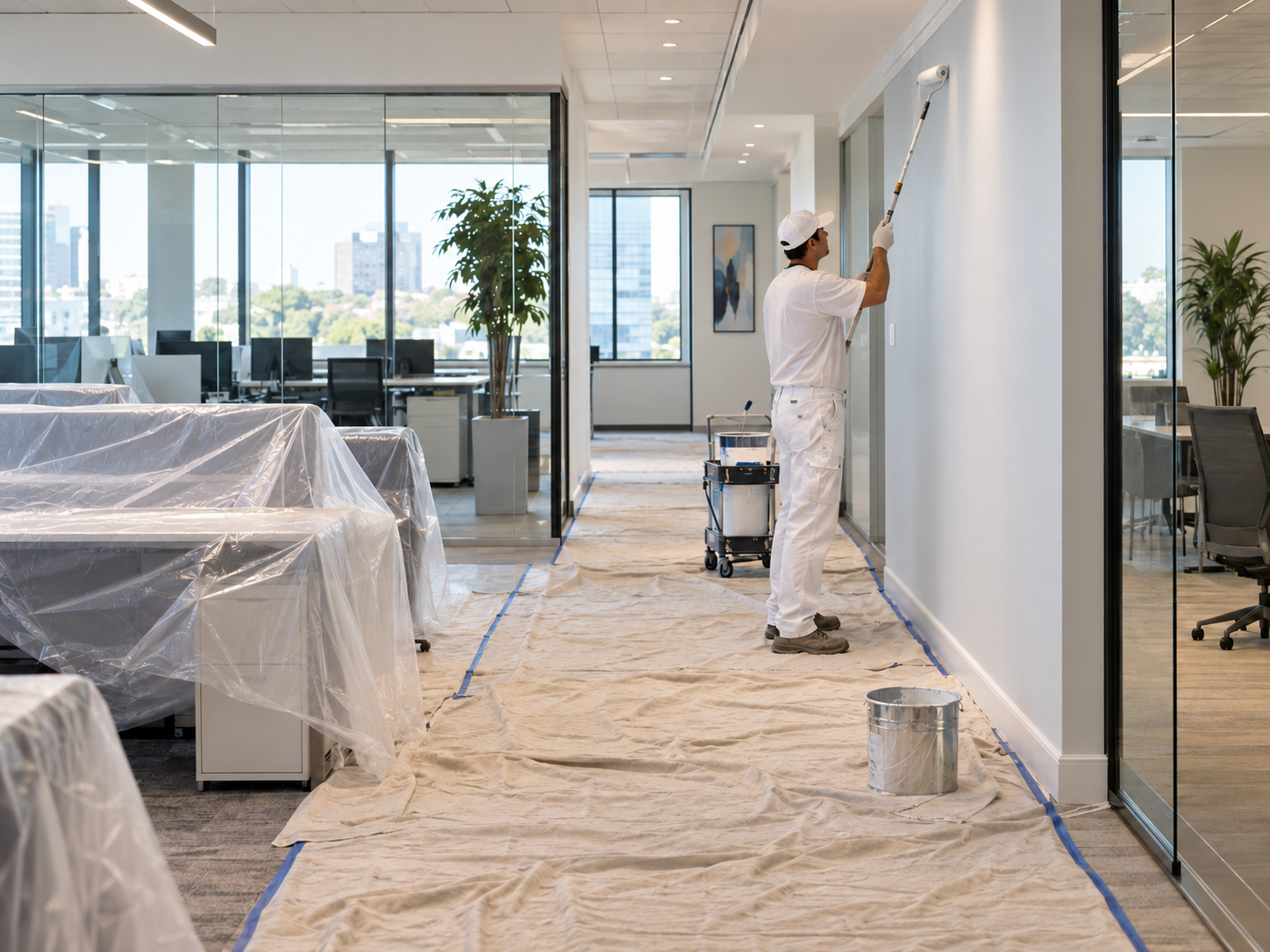
Interior commercial painting doesn’t just affect the look of your walls—it impacts the air your people breathe. In occupied commercial environments, managing Indoor Air Quality (IAQ) during a painting project is critical for safety, compliance, and occupant comfort.
That’s why professional contractors utilize commercial air scrubbers during high-impact projects. At Commercial Painting Inc., stringent air quality control is a core component of our safety-first approach, particularly when working in offices, schools, healthcare facilities, and tenant-occupied buildings.
What Is a Commercial Air Scrubber?
An air scrubber is a high-capacity, heavy-duty air filtration system specifically designed for construction and renovation environments. Unlike standard residential air purifiers, commercial air scrubbers are engineered to aggressively remove airborne contaminants generated during sanding, surface preparation, and paint application.
By continuously cycling the room’s air through advanced, multi-stage filtration systems, they effectively remove:
- Fine sanding dust and drywall debris
- Microscopic paint overspray
- Construction contaminants
- Airborne chemicals, VOCs, and nuisance odors
The Power of HEPA Filtration & Carbon Scrubbing
Professional air quality management relies on a layered approach to filtration to handle different types of hazards.
HEPA Filtration for Particulates
Most professional air scrubbers feature HEPA (High-Efficiency Particulate Air) filters, which capture 99.97% of airborne particles as small as 0.3 microns. During surface prep and painting, HEPA filtration dramatically reduces airborne sanding dust, microscopic paint particles, and respiratory irritants, preventing cross-contamination between work zones.
Carbon Filtration for VOCs
Many paints contain Volatile Organic Compounds (VOCs)—chemicals that evaporate into the air during application and drying. Exposure to elevated VOC levels can cause headaches, dizziness, and respiratory discomfort. Even low-VOC or zero-VOC paints can produce temporary odors. To combat this, air scrubbers are equipped with activated carbon filters that trap harmful gases, chemical off-gassing, and lingering odors.
OSHA and Cal/OSHA Air Quality Compliance
Commercial contractors are required to maintain safe working conditions under OSHA (Occupational Safety and Health Administration) and Cal/OSHA regulations. These strict guidelines mandate that employers control exposure to airborne contaminants and provide a workplace free from recognized hazards.
Air scrubbers serve as a powerful
engineering control—meaning they reduce airborne hazards directly at the source, rather than relying solely on personal protective equipment (PPE). For commercial property owners and facility managers, partnering with a contractor who uses air scrubbers demonstrates proactive risk management and strong regulatory awareness.
Air Scrubber vs. Air Purifier: What’s the Difference?
Although the terms are sometimes used interchangeably, commercial air scrubbers and residential air purifiers serve entirely different purposes.
| Feature | Residential Air Purifiers | Commercial Air Scrubbers |
|---|---|---|
| Primary Use | General home use, light dust/pet dander | Active construction, renovation and repaint |
| Airflow Capacity | Lower airflow (measured in CFM) | High-volume CFM airflow for rapid air exchange |
| Filtration | Basic HEPA; minimal odor control | Multi-stage (Pre-filter, HEPA, Activated Carbon) |
| Containment | Cannot alter room pressure | Can create negative air pressure to trap contaminants inside the work zone |
For professional commercial painting projects—especially those involving heavy sanding or enclosed interior work—a commercial air scrubber is the only appropriate solution.
Addressing Paint Sensitivity in Occupied Spaces
Certain individuals are highly sensitive to paint-related exposures, including people with asthma, chemical sensitivities, elderly occupants, and children. To minimize risk and eliminate symptoms like nausea or headaches in occupied spaces, professional contractors utilize a comprehensive strategy:
- Selecting premium low-VOC or zero-VOC coatings
- Maximizing natural and mechanical ventilation
- Deploying multi-stage HEPA air scrubbers
- Phasing work schedules to drastically reduce occupant exposure
- Clearly communicating project timelines and safety measures to facility managers
This careful approach is paramount in medical offices, schools, corporate headquarters, and multi-tenant commercial buildings.
When Should Air Scrubbers Be Used?
While not every single repaint requires heavy-duty filtration, air scrubbers are highly recommended when:
- Buildings remain occupied during the painting process.
- Work occurs in enclosed or poorly ventilated interior spaces.
- Extensive drywall repair, sanding, or surface prep is involved.
- Vulnerable or sensitive populations are present in the building.
- Strict Indoor Air Quality (IAQ) is a top priority for the client.
Safer Painting Starts with Air Quality Control
A professional paint job should revitalize your space—not compromise the environment inside of it. By incorporating HEPA filtration, VOC-conscious product selection, and advanced air scrubber technology, Commercial Painting Inc. guarantees:
- Cleaner indoor air
- Safer, compliant job sites
- Minimal disruption to your daily operations
- Total peace of mind for you and your tenants
Planning an interior commercial painting project?
Don't leave your building's air quality to chance. Contact
Commercial Painting Inc. today for a thorough consultation and let’s complete your project safely, cleanly, and professionally.
Contact Us
We will get back to you as soon as possible.
Please try again later.