

The Heat-Reflective Edge: How Cool Roof Coatings Lower Energy Bills and Extend Roof Life

July 2, 2026

The Heat Your Roof Absorbs Is Costing You Money


During a California summer, a conventional dark commercial roof can reach temperatures of 150–190°F under direct sunlight. That heat doesn't just stay on the roof—it transfers into your building, forcing your HVAC system to work harder throughout the day.


For commercial property owners, facility managers, and HOAs, that means:

  • Higher electricity bills
  • Increased HVAC wear and tear
  • Less comfortable indoor spaces
  • Faster roof deterioration


Fortunately, there's a proven solution: Cool Roof coatings.


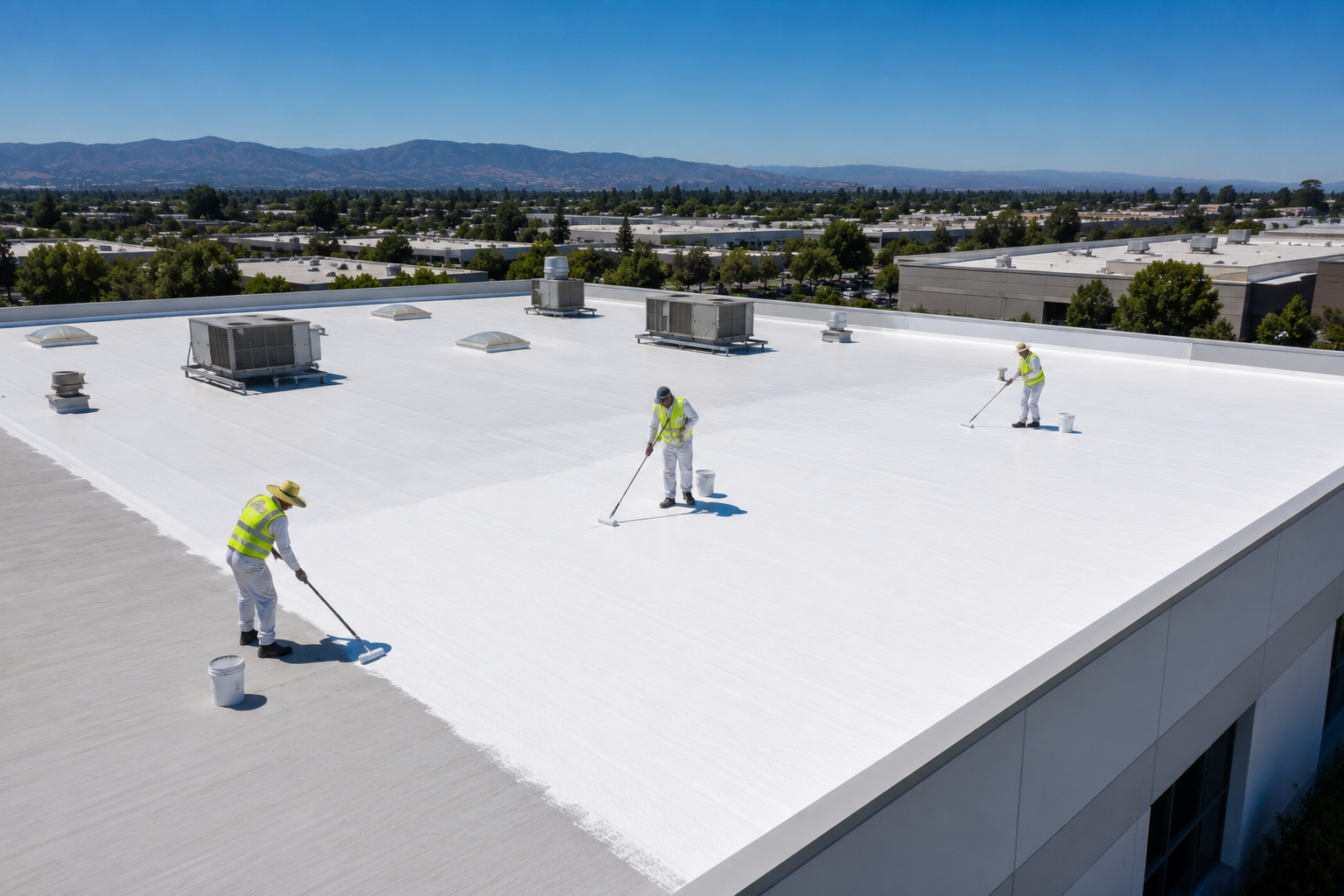
Rather than replacing an entire roofing system, a professionally applied reflective roof coating can significantly reduce roof surface temperatures while extending the life of your existing roof.

What Is a Cool Roof Coating?


A cool roof coating is a specialized reflective coating applied over an existing commercial roof.


Unlike traditional roof coatings that primarily waterproof the surface, cool roof coatings are engineered to reflect sunlight and release absorbed heat instead of trapping it.


These coatings are commonly used on:

  • Warehouses
  • Office buildings
  • Retail centers
  • Schools
  • Apartment complexes
  • Manufacturing facilities
  • Distribution centers


They work especially well on flat and low-slope roofing systems.

The Physics Behind Cool Roof Technology


Think about wearing a black shirt versus a white shirt on a hot summer day.


The white shirt reflects sunlight and stays cooler.


A cool roof coating works the same way.


Two scientific properties determine its performance:


1. Solar Reflectance

Solar reflectance measures how much sunlight the roof reflects away instead of absorbing.

Higher reflectance means less heat enters the building.


2. Thermal Emittance

Thermal emittance measures how efficiently the roof releases any heat it does absorb.

Instead of storing heat into the evening hours, reflective coatings help roofs cool down much faster.

Together, these two characteristics dramatically reduce roof surface temperatures.

Lower Roof Temperatures Mean Lower HVAC Costs


When your roof absorbs less heat, your building interior stays cooler naturally.


That creates several benefits:

  • Air conditioning cycles less frequently
  • HVAC equipment experiences less strain
  • Peak electrical demand decreases
  • Occupants enjoy more consistent indoor temperatures


For large commercial buildings with expansive roof areas, these savings can become significant over time.

Extend the Life of Your Existing Roof


Sunlight doesn't just create heat—it also damages roofing materials through constant ultraviolet (UV) exposure.


Over time, UV rays cause:

  • Cracking
  • Drying
  • Membrane deterioration
  • Expansion and contraction damage
  • Water intrusion risks


A reflective coating shields the existing roof from much of that damage.


Instead of replacing a roof prematurely, many property owners can extend its service life through a properly maintained coating system.

Sustainability Without Major Renovation


Many companies are looking for ways to improve sustainability without expensive capital projects.


Cool roof coatings help by:

  • Reducing overall building energy consumption
  • Lowering greenhouse gas emissions associated with cooling
  • Supporting corporate sustainability initiatives
  • Helping reduce urban heat island effects


For organizations pursuing environmental goals, roof coatings are often one of the most cost-effective building upgrades available.

Which Buildings Benefit the Most?


Cool roof coatings provide the greatest return for buildings with:

  • Large flat roofs
  • High daytime occupancy
  • Significant cooling costs
  • Older roofing systems still in good structural condition
  • Warm or sunny climates


In the Bay Area and throughout California, many commercial buildings are excellent candidates due to long cooling seasons and abundant sunshine.

Professional Application Matters


Not every roof is ready for a reflective coating.


Before installation, experienced contractors evaluate:

  • Roof condition
  • Existing coating compatibility
  • Moisture intrusion
  • Surface preparation requirements
  • Drainage conditions


Proper cleaning, repairs, and application are essential to achieving maximum reflectivity and long-term performance.


Poor preparation can reduce adhesion and shorten the coating's lifespan.

Why Work with Commercial Painting Inc.?


At Commercial Painting Inc., we help Bay Area property owners protect their investments with high-performance commercial coatings designed for durability, efficiency, and long-term value.


Our team evaluates your existing roof, recommends the right coating system, and applies it using manufacturer-approved processes to maximize performance and longevity.


Whether you're looking to reduce operating costs, extend roof life, or improve your building's sustainability, we can help you determine whether a cool roof coating is the right solution.

Schedule Your Commercial Roof Evaluation


Looking for ways to reduce cooling costs without replacing your roof?


Commercial Painting Inc. provides professional commercial roof coating services throughout the Bay Area. Contact us today to schedule an evaluation and discover how reflective roof coatings can improve your building's performance while lowering long-term operating costs.

Contact Us

June 25, 2026
Compare epoxy flooring and polished concrete for warehouses, manufacturing facilities, and industrial buildings. Learn which option offers better durability, maintenance costs, and long-term ROI.
June 18, 2026
Learn how color-coded warehouse line striping helps prevent trip hazards, improves OSHA compliance, reduces workplace injuries, and creates safer, more efficient facilities.
June 11, 2026
Learn why EPA Lead RRP certification is essential in commercial painting. Protect tenants, workers, and property while staying compliant with federal lead-safe regulations.
Facility manager reviewing contractor plans to prevent operational downtime during a commercial proj
June 4, 2026
Learn the 7 critical questions facility managers should ask contractors to prevent operational downtime and maintain business continuity during projects.
May 28, 2026
Facility maintenance budgeting is one of the most important responsibilities for property and facility managers. This guide outlines a practical step-by-step process to help facility managers estimate maintenance costs more accurately while improving long-term facility performance.
May 19, 2026
Discover how professional coordination and proactive communication can eliminate resident complaints and ensure success during large-scale HOA multi-unit projects.
Show More