Comparing Epoxy Flooring and Polished Concrete
1. Durability Under Heavy Traffic
Industrial floors endure constant abuse from forklifts, pallet jacks, heavy machinery, and foot traffic. Choosing a flooring system that can withstand these conditions is essential.
Epoxy Flooring
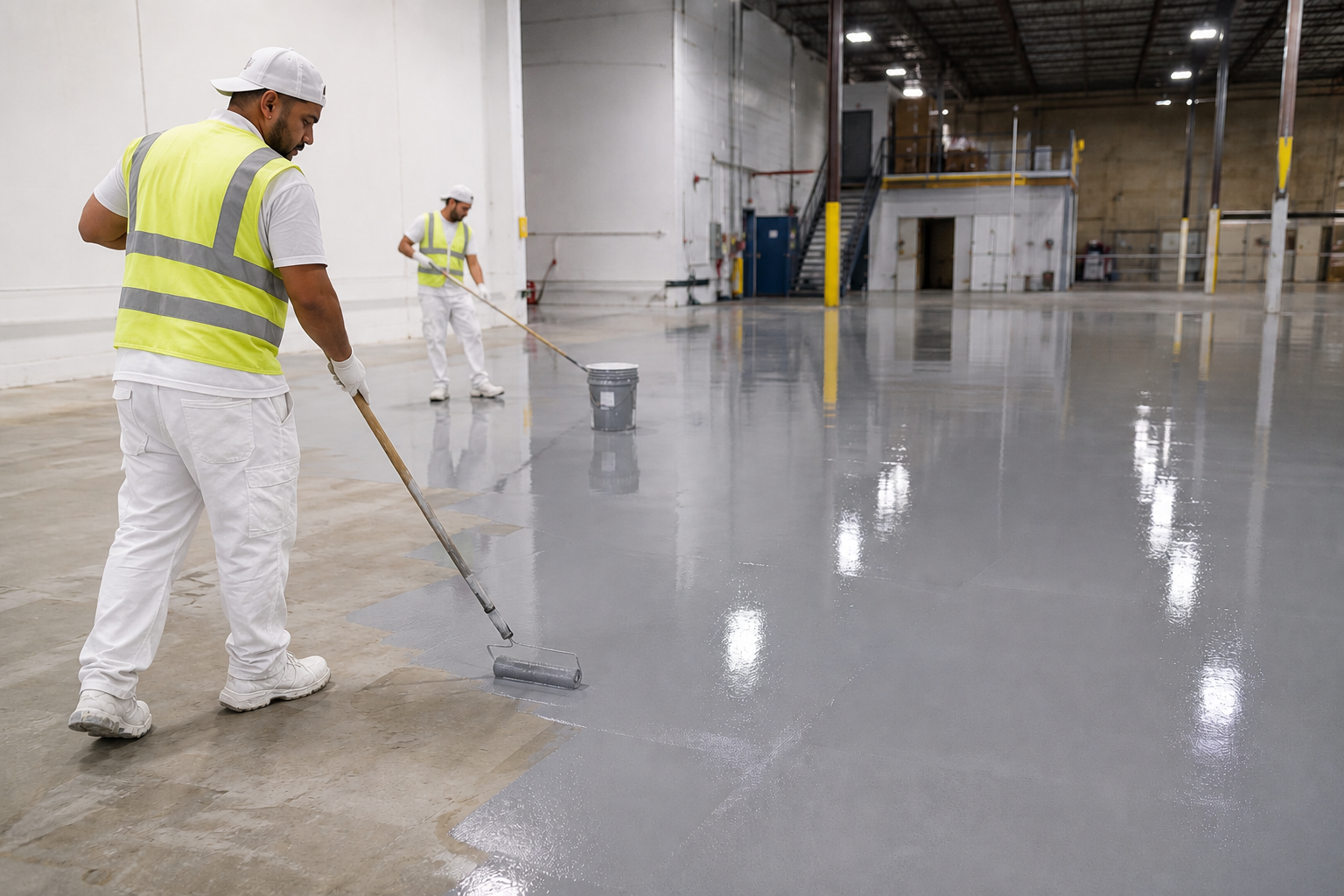
Industrial-grade epoxy systems are engineered for demanding environments. They resist impacts, abrasions, and heavy rolling loads while protecting the concrete underneath from wear and damage.
Epoxy is particularly effective in facilities where equipment operates around the clock or where dropped tools and heavy pallets are common.
Polished Concrete
Polished concrete performs well in facilities with moderate traffic. However, continuous forklift use and heavy industrial activity can gradually reduce the floor's shine and expose aggregate over time.
While the concrete remains functional, its appearance may deteriorate faster than a properly installed epoxy system.
Winner: Epoxy flooring is typically the better choice for facilities with heavy equipment and constant industrial traffic.
2. Resistance to Chemicals and Stains
Chemical exposure is one of the biggest factors affecting industrial flooring performance.
Epoxy Flooring
Epoxy creates a non-porous barrier that resists:
- Oils
- Grease
- Solvents
- Acids
- Cleaning chemicals
- Automotive fluids
Because spills remain on the surface, cleanup is faster and the underlying concrete stays protected.
Polished Concrete
Although densified concrete is more resistant than untreated concrete, it remains somewhat porous. If spills aren't cleaned promptly, chemicals and oils may penetrate the surface, causing staining or long-term deterioration.
Winner: Epoxy flooring provides significantly better protection against chemicals and staining.
3. Cleaning and Maintenance Costs
Maintenance plays a major role in the overall cost of ownership for industrial flooring.
Epoxy Flooring
Routine maintenance typically involves:
- Sweeping
- Dust mopping
- Occasional scrubbing with neutral cleaners
Its seamless, non-porous surface prevents dirt, dust, and liquids from soaking into the floor, making cleanup faster and more efficient.
Polished Concrete
Polished concrete also requires relatively little maintenance but often needs:
- Frequent dust mopping
- Periodic burnishing to maintain gloss
- Specialized cleaners to preserve its finish
Without consistent maintenance, polished concrete may gradually lose its shine.
Winner: Both flooring systems are relatively easy to maintain. The better option depends on your operational needs and cleaning routines.
4. Safety Performance
Flooring can have a direct impact on workplace safety.
Epoxy Flooring
Epoxy systems can be customized with:
- Slip-resistant additives
- OSHA-compliant safety striping
- Color-coded pedestrian walkways
- Equipment traffic lanes
- Hazard zone markings
These features improve visibility and help organize warehouse traffic, reducing the risk of accidents.
Polished Concrete
Polished concrete offers good traction when clean and dry but can become slippery when wet or contaminated. It also lacks the built-in visual safety features that epoxy systems can provide.
Winner: Epoxy flooring offers greater flexibility for improving workplace safety.
5. Initial Installation Cost
When comparing upfront costs, polished concrete generally requires a lower initial investment because it utilizes the existing concrete slab without applying a separate coating system.
Epoxy flooring typically involves:
- Surface preparation
- Concrete repairs
- Moisture testing
- Primer application
- Multiple coating layers
- Cure time before the floor can be used
These additional materials and installation steps usually result in a higher initial cost than polished concrete.
Winner: Polished concrete is often the more budget-friendly option for facilities focused on minimizing upfront expenses.
6. Long-Term Return on Investment (ROI)
While polished concrete generally costs less to install, long-term value depends on how your facility operates.
Epoxy Flooring ROI Benefits
Epoxy flooring can reduce long-term operating costs by:
- Protecting concrete from damage
- Reducing repair and replacement expenses
- Improving workplace safety
- Resisting chemicals and spills
- Simplifying daily cleaning
- Maintaining a professional appearance for years
Facilities with heavy industrial activity often recover the higher installation cost through lower maintenance and repair expenses over time.
Polished Concrete ROI Benefits
Polished concrete provides long-term value by:
- Lowering installation costs
- Reducing maintenance requirements
- Improving light reflectivity, which may reduce lighting costs
- Offering a long service life with proper care
- Delivering a clean, modern aesthetic
For facilities with lighter industrial use, polished concrete can be an excellent long-term investment.
Which Delivers Better ROI?
The best flooring system depends on your facility's daily operations.
Epoxy flooring is typically the better investment for:
- Manufacturing plants
- Food and beverage facilities
- Automotive service centers
- Chemical processing facilities
- Warehouses with heavy forklift traffic
- Polished concrete is often the better investment for:
- Distribution centers with moderate traffic
- Retail warehouse spaces
- Commercial showrooms
- Educational facilities
- Buildings seeking a lower upfront investment
The most successful facility managers evaluate flooring based on total lifecycle cost rather than installation price alone.