

The Hidden Cost of Deferred Painting Maintenance
Property owners and managers often view painting as a cosmetic upgrade—something that can be postponed until a building looks noticeably worn. In reality, paint is one of the most important protective systems on a property.
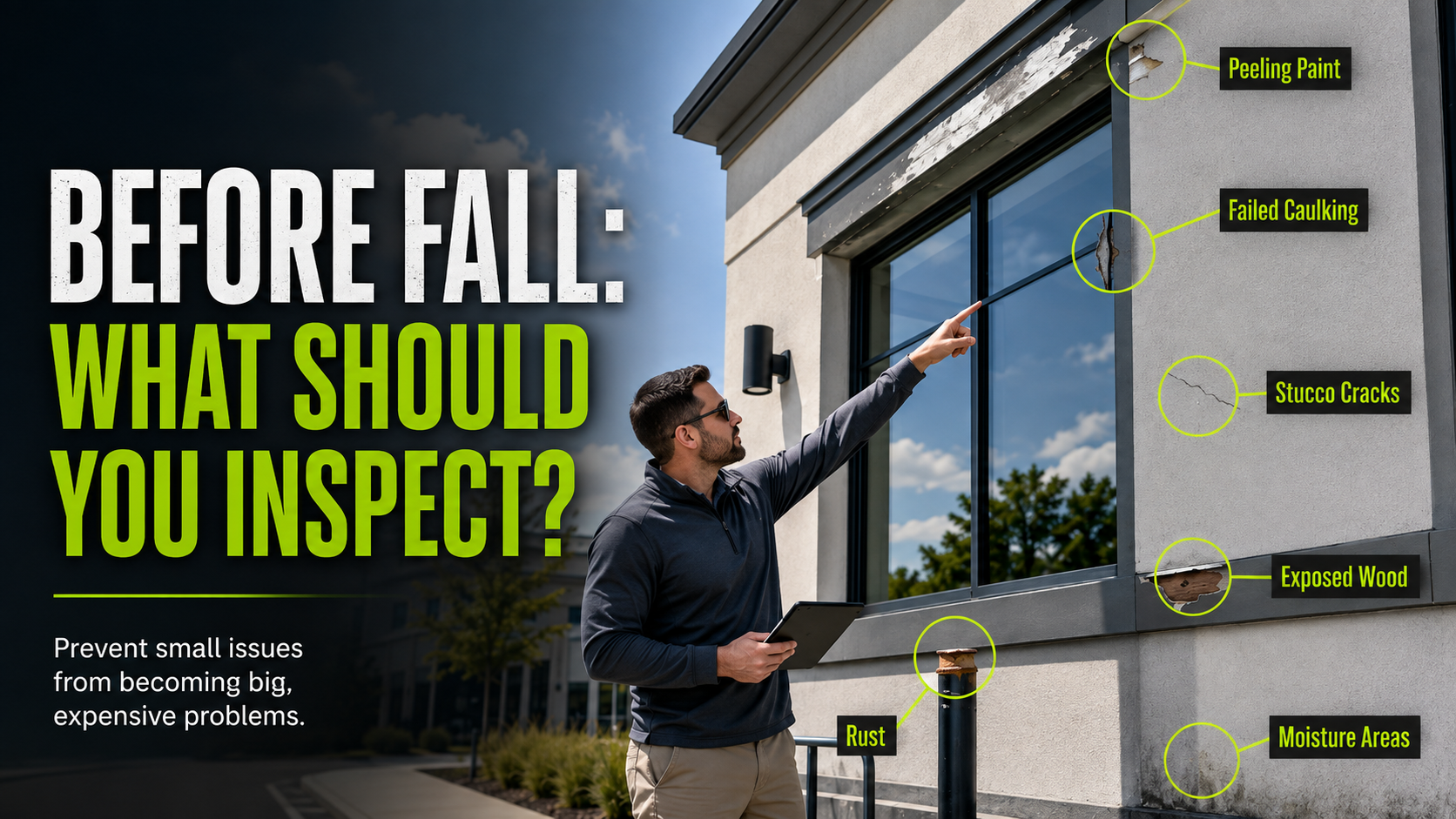
Exterior coatings create a barrier against sunlight, rain, moisture, pollution, temperature changes, and everyday wear. When routine painting maintenance is delayed, small coating failures can expose the building materials underneath. A minor area of peeling paint can eventually lead to wood rot, corrosion, stucco deterioration, concrete damage, and significantly higher repair costs.
For property managers, facility managers, HOA boards, and commercial property owners, preventative painting maintenance is not simply about appearance. It is an asset-protection strategy that can extend the life of a building and make long-term maintenance costs more predictable.
Paint Is More Than Just Appearance
A properly applied paint or coating system protects the surface beneath it. Depending on the building, that surface may be wood, metal, stucco, concrete, drywall, or another material vulnerable to environmental damage.
Over time, exposure to UV rays, moisture, irrigation, coastal air, temperature fluctuations, and pollution gradually weakens the coating system. Once paint begins to crack, peel, blister, or separate, the underlying substrate becomes vulnerable.
The damage may remain hidden at first. By the time deterioration becomes obvious, repainting alone may no longer be enough.
In most cases, the cost of inspecting, preparing, and repainting a surface is much lower than the cost of replacing the damaged material underneath it.
How Deferred Painting Maintenance Becomes Expensive
1. Peeling Paint Can Lead to Wood Rot
Wood trim, siding, fascia boards, doors, window frames, decks, and railings rely on paint or stain to limit moisture absorption.
When a coating cracks, peels, or blisters:
- Water reaches the exposed wood
- The wood absorbs moisture and begins to swell
- Repeated wet and dry cycles cause splitting and deterioration
- Fungi may begin breaking down the wood fibers
- Sections of trim, siding, or fascia may require replacement
A project that could have involved cleaning, scraping, spot priming, and repainting may eventually require carpentry work before painting can even begin.
Wood deterioration is especially common around rooflines, gutters, windows, doors, horizontal surfaces, and areas affected by irrigation. Regular inspections can identify exposed wood before decay spreads beneath the surface.
2. Minor Rust Can Become Serious Corrosion
Steel doors, railings, stair systems, gates, structural components, pipes, and commercial equipment depend on protective coatings to reduce oxidation and corrosion.
Rust often begins at:
- Scratches and impact points
- Fasteners and welds
- Joints and seams
- Horizontal surfaces
- Areas where water collects
- Locations exposed to coastal air or chemicals
When rust is addressed early, the surface may only need cleaning, preparation, rust-inhibitive primer, and a compatible finish coat.
When corrosion is ignored, it can spread beneath the surrounding paint. Advanced deterioration may require grinding, abrasive blasting, welding, component replacement, or specialized restoration.
For commercial and multi-family properties, corroded railings, stairs, and metal components can also create safety and liability concerns.
3. Failed Coatings Can Allow Stucco Damage
Stucco is durable, but it is not immune to water intrusion. Hairline cracks, failed sealants, and worn exterior coatings can allow moisture to enter the wall system.
Without timely maintenance:
- Hairline cracks may widen
- Water can enter behind the stucco
- Staining and efflorescence may appear
- Paint may bubble, blister, or peel
- Stucco may soften or deteriorate
- Mold or mildew may develop
- Framing or other concealed materials may be affected
Painting over damaged stucco without correcting the underlying problem may temporarily improve its appearance, but it will not provide a lasting solution.
Cracks, failed caulking, leaks, and damaged areas should be evaluated and repaired before the new coating system is applied.
4. Worn Coatings Can Accelerate Concrete Deterioration
Parking structures, retaining walls, tilt-up buildings, walkways, loading areas, and other commercial concrete surfaces may benefit from protective coatings or sealers.
As these protective systems wear away:
- Moisture can penetrate the surface
- Contaminants may reach embedded reinforcing steel
- Reinforcing steel can begin to corrode
- Cracks may expand
- Surface spalling and delamination may occur
- Repairs can become more extensive
Bay Area properties near the coast, industrial areas, or high-traffic environments may experience additional exposure to salts, pollutants, chemicals, and moisture.
Preventative coating maintenance can help reduce water intrusion and extend the service life of concrete surfaces.
The True Cost Is Not the Paint
Property owners sometimes delay repainting to reduce short-term expenses. Unfortunately, deferred painting maintenance often shifts spending from a predictable operating expense to an unexpected capital repair project.
A scheduled painting project may include:
- Pressure washing or cleaning
- Routine surface preparation
- Minor repairs
- Caulking
- Spot priming
- Premium coatings
- Planned labor
A neglected property may require:
- Carpentry and wood replacement
- Extensive rust removal
- Metal fabrication or welding
- Stucco reconstruction
- Concrete restoration
- Waterproofing
- Mold remediation
- Leak correction
- Additional access equipment
- Emergency repairs
- Tenant or business disruption
The longer a coating system is allowed to deteriorate, the more preparation and repair work will generally be required.
This is why the least expensive time to address paint failure is often when the first warning signs appear—not years later after the substrate has been damaged.
Warning Signs Property Owners Should Not Ignore
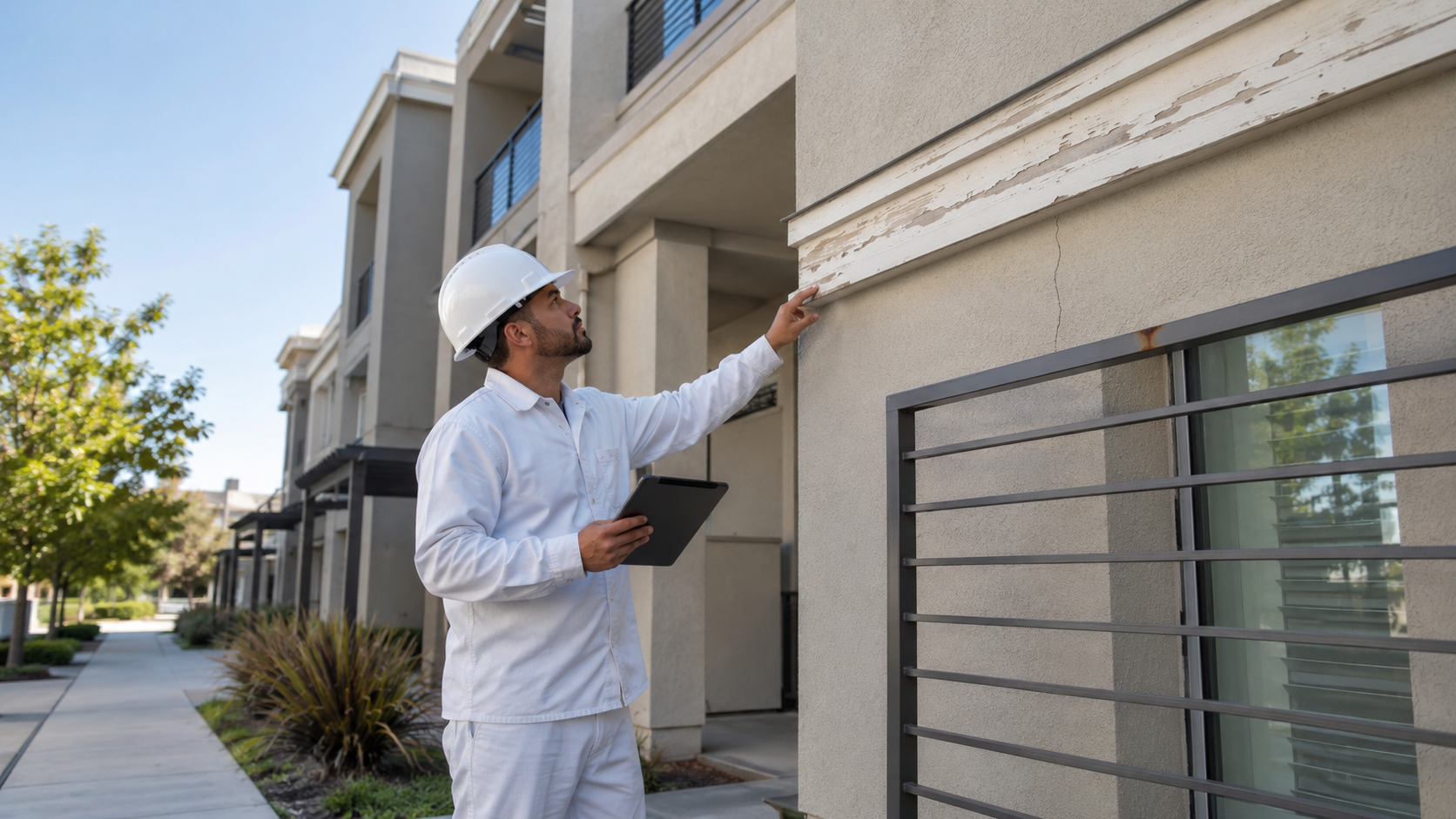
Routine inspections can identify small problems before they develop into major repairs.
Watch for:
- Peeling, flaking, or cracking paint
- Bubbling or blistering
- Chalky or heavily faded surfaces
- Exposed wood
- Soft, swollen, or splitting wood
- Rust spots or rust streaks
- Cracks around windows and doors
- Failed caulking or sealants
- Stucco staining or discoloration
- Water stains
- Mildew or organic growth
- Paint separation near rooflines and gutters
- Repeated coating failure in the same location
Recurring peeling, bubbling, or staining may indicate an underlying leak, drainage issue, irrigation problem, or moisture source. That condition should be corrected before repainting.
Deferred Maintenance Increases Preparation Costs
Surface preparation is one of the most important parts of a successful painting project.
A well-maintained building may only require cleaning, minor scraping, spot priming, caulking, and localized repairs. A neglected building may need extensive scraping, sanding, pressure washing, rust removal, wood repair, stucco patching, concrete repair, and full priming.
Additional preparation increases:
- Labor requirements
- Material use
- Equipment needs
- Project duration
- Access requirements
- Tenant disruption
- Overall project cost
Preventative maintenance helps preserve sound surfaces so more of the project budget can be directed toward the protective coating system rather than major restoration.
Preventative Painting Makes Budgeting More Predictable
Emergency repairs are difficult to budget for. They can affect operating expenses, reserve funds, maintenance schedules, tenant satisfaction, and business operations.
A proactive painting maintenance program allows property owners to:
- Identify vulnerable areas early
- Prioritize repairs based on urgency
- Spread costs across multiple budget cycles
- Reduce emergency restoration work
- Extend the life of building materials
- Maintain a professional appearance
- Coordinate projects around tenants and operations
- Document recurring maintenance concerns
Not every side of a building deteriorates at the same rate. South- and west-facing walls may receive greater UV exposure. Rooflines, window trim, horizontal surfaces, and areas near landscaping may experience more moisture.
A customized plan allows maintenance resources to be directed toward the areas that need attention first.
What Should a Painting Maintenance Inspection Include?
A professional inspection should evaluate more than color and curb appeal. It should examine the condition of the coating system and the surfaces it protects.
Important areas to review include:
- Exterior walls and siding
- Fascia boards, eaves, and soffits
- Window and door trim
- Caulking and sealant joints
- Stucco cracks and patches
- Metal railings, stairs, gates, and doors
- Concrete walls and structures
- Decks, fences, and stained wood
- Areas near gutters and downspouts
- Surfaces exposed to irrigation
- High-traffic interior walls and common areas
- Previously repaired or water-damaged locations
Photographs and written documentation can help property managers track deterioration, prioritize work, and plan future budgets.
How Often Should Commercial Buildings Be Repainted?
There is no single repainting schedule that applies to every property. The appropriate maintenance cycle depends on several factors:
- Building material
- Type and quality of the existing coating
- Previous surface preparation
- Sun and weather exposure
- Coastal or inland location
- Moisture and irrigation exposure
- Building orientation
- Daily traffic and operational wear
- Quality of earlier repairs
- Color selection and coating performance
Many commercial properties benefit from a professional inspection every one to two years, even when a full repaint is not yet necessary.
Inspections may reveal that only certain areas require attention. Targeted touch-ups, crack repairs, caulking, rust treatment, or spot priming can delay widespread failure and extend the useful life of the existing coating system.
Preventative Maintenance Protects Property Value
A proactive maintenance program can help property owners:
- Extend the life of exterior building materials
- Reduce long-term repair expenses
- Preserve curb appeal
- Improve tenant and customer impressions
- Protect building value
- Reduce safety and liability concerns
- Plan maintenance budgets more accurately
- Minimize disruption from emergency repairs
Painting should not be viewed as an expense that can be postponed indefinitely. It is a cost-effective way to protect the building envelope and preserve the materials that make up the property.
Protect Your Investment Before Damage Starts
Minor paint failures rarely stay minor. Peeling paint exposes wood to moisture. Scratched coatings allow rust to spread. Stucco cracks permit water intrusion. Worn concrete coatings leave surfaces vulnerable to deterioration.
Addressing these conditions early usually requires less preparation, fewer repairs, and less disruption than waiting until the coating system has failed completely.
Commercial Painting Inc. helps commercial property owners, facility managers, HOA communities, multi-family properties, businesses, and homeowners throughout San Jose, Silicon Valley, and the Greater Bay Area protect their buildings with professional painting and preventative maintenance solutions.
Our services include:
- Commercial and residential painting
- Interior and exterior painting
- Multi-family and HOA painting
- Office and retail painting
- Industrial coatings
- Epoxy floor coatings
- Pressure washing
- Wood and drywall repair
- Stucco preparation and coating
- Deck and fence staining
- Color consultation
- Maintenance painting programs
Whether your property needs a complete repaint or targeted maintenance, our team can assess its condition and recommend a practical, cost-effective solution.
Schedule a free estimate with Commercial Painting Inc. and protect your property before minor coating failures become major repairs.
Contact Us
We will get back to you as soon as possible.
Please try again later.