

Commercial Door & Frame Painting: What Works Best?
A freshly painted commercial space can look impressive, but some surfaces show wear much faster than others. Doors, metal frames, baseboards, and trim are constantly exposed to fingerprints, scuffs, cleaning products, and everyday contact.
While walls may only need occasional cleaning, these high-touch surfaces face a different level of wear.
Using standard wall paint on them can lead to premature scratching, chipping, and visible damage.
The solution isn't simply choosing a tougher paint. It's selecting the right coating system for each surface, preparing it properly, and using a finish that can withstand daily use.
For property managers and facility teams maintaining commercial buildings in San Jose, Silicon Valley, and the Bay Area, understanding these differences can help extend the life of a paint job and reduce ongoing maintenance.
Why Commercial Doors and Trim Need Different Paint
Not all painted surfaces experience the same conditions.
A typical office wall may be exposed to occasional bumps or scuffs. A door, on the other hand, might be opened and closed hundreds of times a day. Metal frames can get scratched by carts and equipment, while baseboards collect marks from shoes, cleaning tools, and furniture.
These surfaces require coatings designed to handle:
- Frequent contact: Repeated touching, rubbing, and everyday abrasion.
- Regular cleaning: Exposure to cleaning solutions and repeated wiping.
- Impact and scratches: Damage from carts, equipment, furniture, and foot traffic.
- Adhesion challenges: Smooth metal, glossy existing paint, and factory-finished surfaces.
- Moisture exposure: Particularly around entrances, restrooms, and cleaning areas.
Standard interior wall paint may not provide the hardness, adhesion, or cleanability needed for these conditions.
That's why professional commercial painting often involves using different products for walls, doors, frames, and trim—even when everything is painted the same color.
What Is the Best Paint for Commercial Doors and Frames?
The best paint depends on the surface material, existing coating, traffic level, and maintenance requirements.
For many commercial interiors, high-performance waterborne enamels are an excellent option because they combine durability with easier application and cleanup.
1. Waterborne Alkyd Urethane Enamel
Waterborne alkyd urethane coatings provide many of the finish characteristics associated with traditional oil-based enamels while using a water-based formulation.
They are often selected for:
- Interior doors and door frames
- Baseboards and wood trim
- Cabinets and millwork
- Previously painted metal surfaces
Products such as Sherwin-Williams Pro Industrial Waterbased Alkyd Urethane Enamel offer good washability, flow and leveling, and resistance to yellowing compared with traditional alkyd coatings.
These characteristics make waterborne alkyd urethane enamels worth considering where smooth appearance and routine maintenance are both priorities.
2. Waterborne Acrylic Urethane Enamel
Acrylic urethane enamels are another option for frequently used commercial surfaces.
These coatings can provide strong adhesion, abrasion resistance, and relatively fast return-to-service times, depending on the product.
They are commonly used on properly prepared:
- Steel doors and frames
- Handrails and railings
- Wood doors and trim
- Cabinets and other high-contact surfaces
For example, Benjamin Moore HP Command Waterborne Acrylic Urethane is formulated for multiple substrates and is designed for facility maintenance applications where durability and reduced downtime matter.
For busy offices, retail stores, and occupied commercial properties, these performance characteristics can be particularly valuable.
3. Specialty Metal Coatings
Some commercial environments require more specialized coating systems.
Metal frames in warehouses, industrial facilities, loading areas, and high-traffic corridors may need additional protection against abrasion or corrosion.
Depending on the conditions, the appropriate system might include a corrosion-resistant primer, a direct-to-metal coating, or a higher-performance epoxy or urethane finish.
The important distinction is that not every enamel is suitable for every metal surface. Existing coatings, exposure conditions, and manufacturer specifications all influence the final selection.
Why Surface Preparation Matters for Metal Doors and Frames
Even a high-performance coating can fail if the surface underneath hasn't been prepared correctly.
Metal doors and frames can present several challenges, including existing glossy coatings, rust, accumulated oils, and areas where previous paint has chipped or lost adhesion.
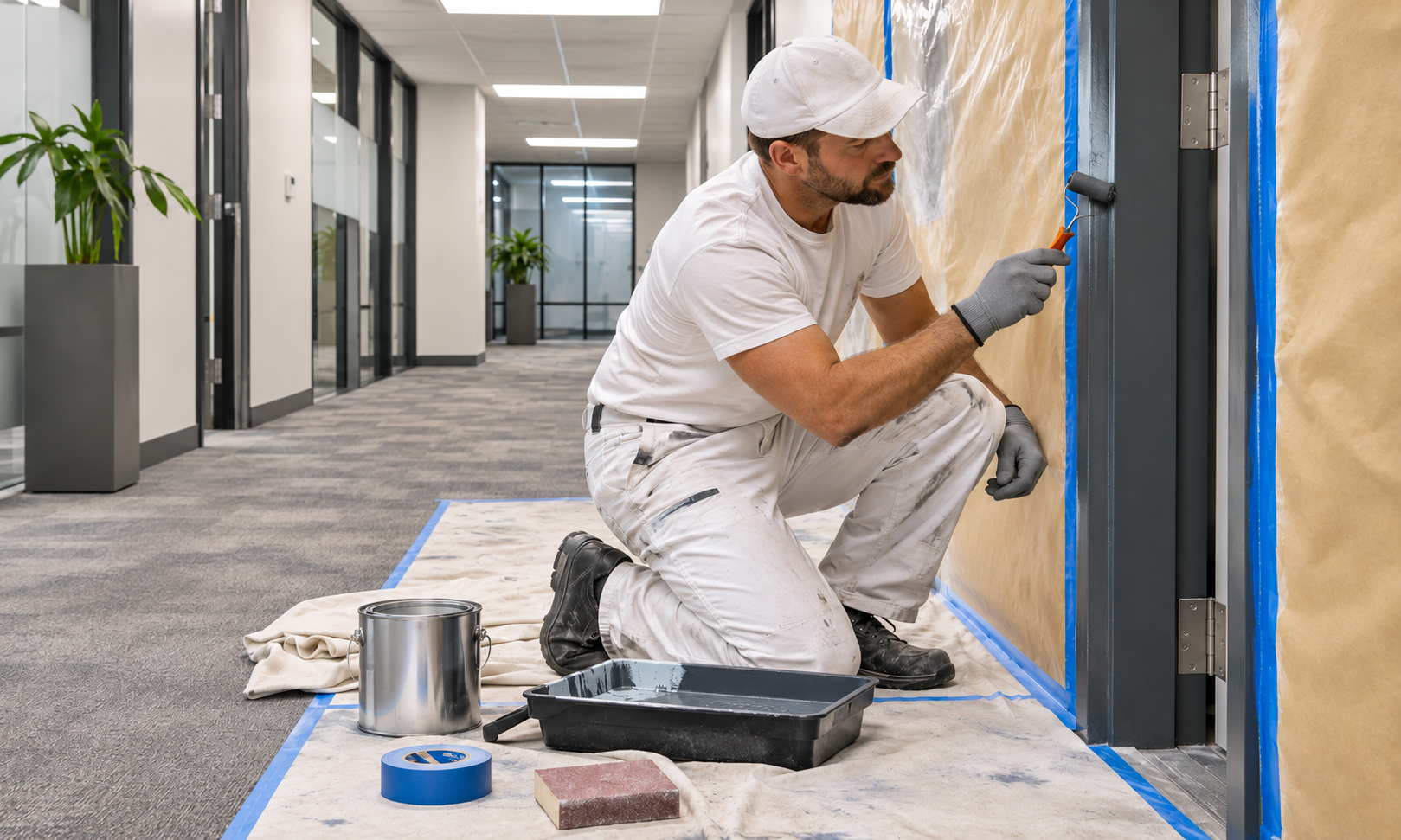
Before repainting, a professional preparation process may include:
- Cleaning: Removing fingerprints, grease, dirt, and surface contaminants.
- Removing loose coatings: Scraping or sanding peeling and poorly adhered paint.
- Addressing corrosion: Removing rust and evaluating damaged metal.
- Sanding or deglossing: Creating a suitable surface for the new coating.
- Priming: Applying a compatible bonding or corrosion-resistant primer where required.
- Finish coating: Applying the specified enamel at the manufacturer's recommended thickness.
Steel, galvanized metal, aluminum, and previously painted surfaces can require different preparation and primer systems.
One common mistake is applying a new coating over an existing glossy finish without confirming adhesion. The paint may look fine initially but begin chipping or peeling around handles, edges, and frequently contacted areas.
Proper preparation helps prevent these issues and supports a longer-lasting finish.
Choosing the Right Sheen: Satin, Semi-Gloss, or Gloss?
Paint sheen affects more than appearance. It can influence cleaning, visibility of surface imperfections, and maintenance.
Here is how the most common options compare.
Satin Finish
Satin offers a subtle sheen that provides a clean, modern appearance without excessive reflection.
It works well for office doors, interior trim, and spaces where a more understated finish is preferred.
Semi-Gloss Finish
Semi-gloss is a popular choice for commercial doors and trim because it creates a polished appearance and is generally easy to wipe down when paired with an appropriate coating formulation.
It is often suitable for door frames, baseboards, and frequently cleaned surfaces.
Gloss Finish
Gloss provides a more reflective appearance and can highlight architectural details. It can also make dents, scratches, and other surface imperfections more noticeable.
Gloss finishes may be appropriate for select metal doors, decorative trim, or specialized applications.
Our recommendation: For many commercial interiors, satin or semi-gloss waterborne enamel provides a practical balance of appearance and maintenance. However, coating chemistry and performance specifications are more important than sheen alone when evaluating durability.
Don't Overlook Baseboards and Trim
Doors and frames receive a lot of attention, but baseboards and trim are often among the first areas to show visible wear.
In commercial buildings, baseboards are repeatedly exposed to vacuum cleaners, mops, shoes, furniture, and rolling equipment.
Using a durable enamel can make these surfaces easier to maintain and help them hold up to everyday activity.
For painted wood or MDF trim, preparation may involve filling dents, caulking gaps, sanding, and applying the appropriate primer. Previously coated metal baseboards may need additional adhesion preparation.
The goal is a consistent, clean finish that can withstand routine maintenance without requiring frequent repainting.
Painting Doors and Frames in Occupied Commercial Buildings
For property managers, coating performance is only part of the decision. Scheduling and disruption also matter.
Repainting doors and frames requires careful coordination because these surfaces may need to remain out of service while the coating dries and develops sufficient resistance to sticking.
This is especially important for:
- Office entrances and shared corridors
- Retail spaces with continuous customer traffic
- Medical and professional facilities
- Apartment and condominium common areas
- Commercial restrooms and employee spaces
Some modern waterborne enamels are designed for faster return to service. However, drying time, recoat time, block resistance, and full cure are not the same thing.
A door that feels dry to the touch may still be vulnerable to damage if it is closed too soon or repeatedly handled.
A professional painting plan should account for coating specifications, ventilation, access restrictions, and the building's operating schedule.
Fire-rated doors also require special consideration. Painting must not interfere with labels, seals, clearances, latching hardware, or the door assembly's required operation.
How to Make Commercial Doors and Trim Last Longer
Even properly painted surfaces need routine maintenance.
Property managers and facility teams can help protect their investment by following a few practical guidelines:
- Use cleaning products compatible with the coating.
- Avoid abrasive pads that may scratch the finish.
- Address chipped or damaged areas before moisture reaches exposed metal.
- Inspect door edges, corners, and areas around handles regularly.
- Keep a record of paint colors, products, and sheen levels for future touch-ups.
- Follow the coating manufacturer's curing and cleaning recommendations.
Maintaining these surfaces consistently can help preserve a professional appearance and minimize unnecessary repainting.
A Better Coating Strategy Starts With the Right Assessment
When planning an interior repaint, it's easy to focus primarily on wall colors and finishes. But doors, frames, baseboards, and trim often require just as much attention.
Choosing the right coating involves more than matching colors. It requires evaluating the surface material, existing paint condition, expected wear, cleaning procedures, and operational needs.
For high-traffic commercial environments, investing in the proper preparation and coating system can make a noticeable difference in how the finished space performs over time.
Commercial Door, Frame & Trim Painting in the Bay Area
At Commercial Painting Inc., we help property managers, facility managers, and commercial property owners plan interior painting projects around their buildings' specific needs.
From office doors and metal frames to baseboards, trim, and high-traffic common areas, our team evaluates surface conditions, preparation requirements, and coating options to deliver a professional, durable finish.
We serve commercial properties throughout San Jose, Silicon Valley, and the greater Bay Area.
Planning an interior repaint or noticing wear on your building's doors and trim?
Contact Commercial Painting Inc. to schedule a free estimate and discuss the right coating solution for your property.
Contact Us
We will get back to you as soon as possible.
Please try again later.