

Safety First: Warehouse Trip Hazards

June 18, 2026

How Color-Coded Line Striping Improves OSHA Compliance and Reduces Workplace Injuries

In busy warehouses, manufacturing facilities, and distribution centers, safety depends on more than employee training and protective equipment. One of the most effective—and often overlooked—safety tools is properly maintained floor line striping.


Faded, unclear, or inconsistent markings can contribute to trip hazards, pedestrian-vehicle conflicts, and workplace injuries. Color-coded line striping helps facilities improve organization, enhance safety, and support compliance with OSHA workplace safety requirements.

Why Warehouse Trip Hazards Matter


According to OSHA, slips, trips, and falls are among the most common workplace incidents. In warehouses, these hazards often result from:

  • Unmarked walkways
  • Poorly defined work zones
  • Damaged flooring
  • Cluttered aisles
  • Faded safety markings
  • Confusing traffic patterns


Even a minor incident can lead to employee injuries, lost productivity, workers' compensation claims, and potential liability concerns.


A proactive floor marking program helps reduce these risks before accidents occur.

The Role of Color-Coded Line Striping


Warehouse floor striping creates visual guidance that helps employees and visitors navigate facilities safely.

Common applications include:

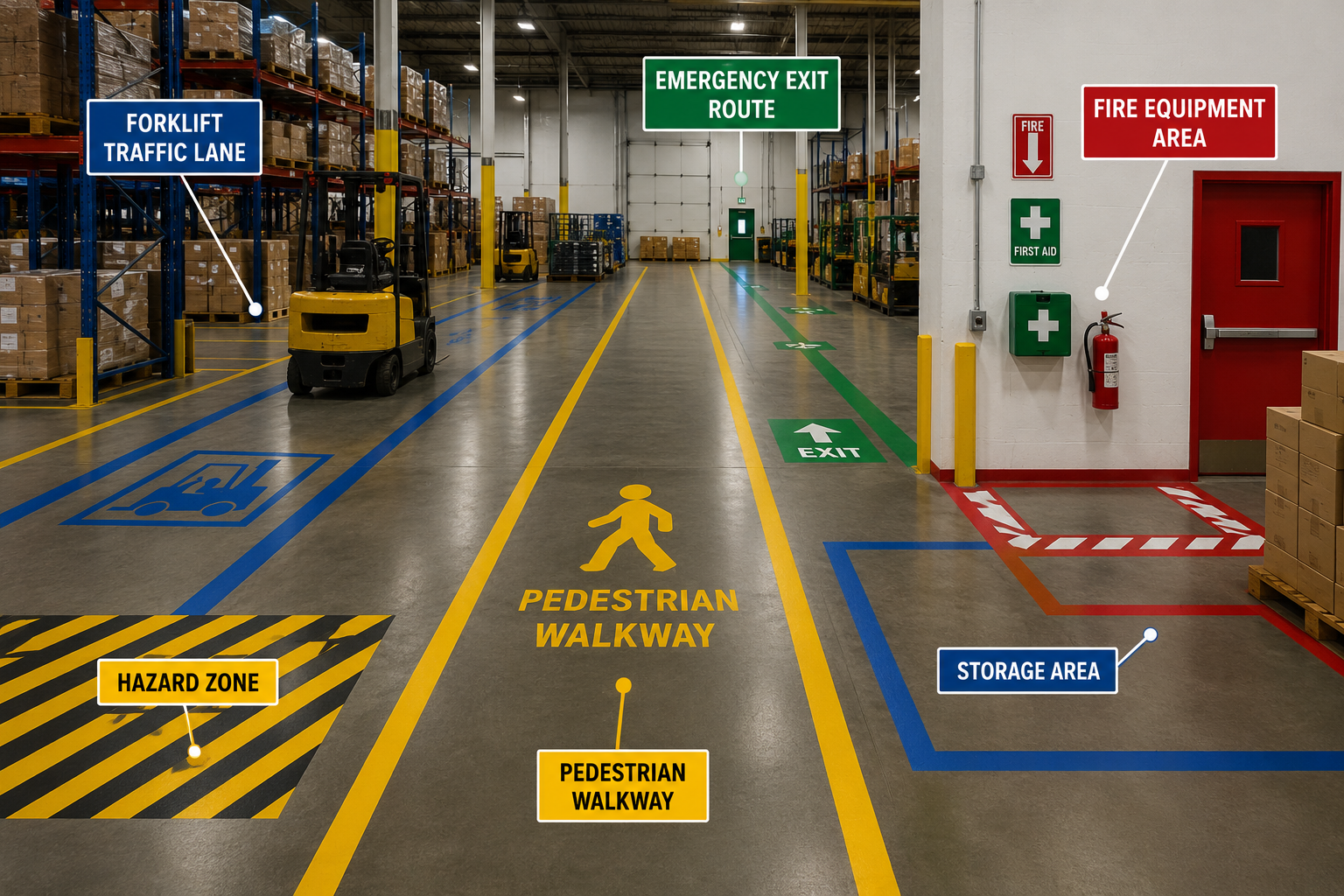
Pedestrian Walkways

Clearly marked walkways separate foot traffic from forklifts and moving equipment.

Forklift Traffic Lanes

Designated travel paths help reduce collisions and improve traffic flow.

Storage Areas

Defined storage zones prevent materials from blocking aisles and emergency access routes.

Emergency Exits and Equipment

Highly visible markings help employees quickly locate exits, fire extinguishers, eyewash stations, and emergency equipment.

Hazard Zones

Color-coded markings draw attention to areas with elevated safety risks.

Understanding OSHA Floor Marking Expectations


While OSHA does not prescribe a single universal color system for every facility, it requires employers to maintain safe workplaces and clearly identify hazards.


Effective floor markings help facilities support compliance efforts by:

  • Identifying pedestrian pathways
  • Designating forklift routes
  • Marking hazardous areas
  • Maintaining clear access to exits and emergency equipment
  • Improving visibility throughout the workspace


Many facilities also follow industry best practices and lean manufacturing standards to establish consistent visual management systems.

Common Warehouse Line Striping Colors


Yellow

Typically used for:

  • Walkways
  • Traffic lanes
  • General caution areas


Red

Often used to identify:

  • Fire protection equipment
  • Emergency areas
  • Restricted access zones


Green

Commonly used for:

  • Safety equipment locations
  • First aid stations
  • Emergency egress routes


Blue

Frequently designates:

  • Work-in-progress areas
  • Equipment staging zones
  • Material storage areas


Black and Yellow Stripes

Used to highlight:

  • Physical hazards
  • Obstructions
  • Areas requiring heightened awareness


A consistent color-coding system helps employees instantly recognize and respond to workplace conditions.

Benefits Beyond Compliance


Investing in professional warehouse line striping delivers more than safety improvements.

  • Fewer Workplace Injuries
  • Clear visual guidance reduces confusion and helps employees avoid hazardous situations.
  • Increased Efficiency
  • Organized traffic flow improves productivity and minimizes bottlenecks.
  • Better Facility Appearance
  • Fresh, professional striping creates a cleaner and more organized work environment.
  • Reduced Liability Exposure
  • Documented safety improvements can demonstrate a company's commitment to workplace safety and risk management.
  • Easier Employee Training
  • Visual controls help new employees quickly understand facility layouts and safety expectations.


Signs Your Warehouse Needs New Line Striping


Your facility may be due for restriping if:

  • Floor markings are faded or difficult to see
  • Traffic patterns have changed
  • New equipment has been introduced
  • Storage layouts have been modified
  • Safety audits identified marking deficiencies
  • Employees frequently ask for directional clarification


Regular inspections help ensure markings remain visible and effective.

Professional Line Striping Makes a Difference


Warehouse floor striping must withstand constant foot traffic, forklifts, pallet jacks, and daily operations. Professional application ensures:

  • Durable coatings designed for industrial environments
  • Precise layouts that maximize efficiency
  • Consistent color standards
  • Minimal disruption to operations
  • Long-lasting visibility


The result is a safer facility that supports both productivity and compliance goals.

Create a Safer Warehouse Environment


Safety starts from the ground up. Well-designed, color-coded line striping helps reduce trip hazards, improve traffic flow, support OSHA compliance efforts, and protect employees from preventable injuries.


Whether you're preparing for a safety audit, updating facility layouts, or simply looking to improve workplace safety, investing in professional warehouse floor markings is one of the most cost-effective improvements you can make.


Need warehouse line striping services in the Bay Area? Commercial Painting Inc. provides durable industrial floor coatings and safety striping solutions designed to help facilities operate safely and efficiently.

Contact Us

Aerial view of a commercial flat roof
July 2, 2026
Learn how cool roof coatings reduce heat absorption, lower HVAC costs, extend roof life, and improve building sustainability. Discover if a cool roof is right for your commercial property.
June 25, 2026
Compare epoxy flooring and polished concrete for warehouses, manufacturing facilities, and industrial buildings. Learn which option offers better durability, maintenance costs, and long-term ROI.
June 11, 2026
Learn why EPA Lead RRP certification is essential in commercial painting. Protect tenants, workers, and property while staying compliant with federal lead-safe regulations.
Facility manager reviewing contractor plans to prevent operational downtime during a commercial proj
June 4, 2026
Learn the 7 critical questions facility managers should ask contractors to prevent operational downtime and maintain business continuity during projects.
May 28, 2026
Facility maintenance budgeting is one of the most important responsibilities for property and facility managers. This guide outlines a practical step-by-step process to help facility managers estimate maintenance costs more accurately while improving long-term facility performance.
May 19, 2026
Discover how professional coordination and proactive communication can eliminate resident complaints and ensure success during large-scale HOA multi-unit projects.
Show More