

Commercial Exterior Painting Before Fall: What Property Managers Should Inspect Now
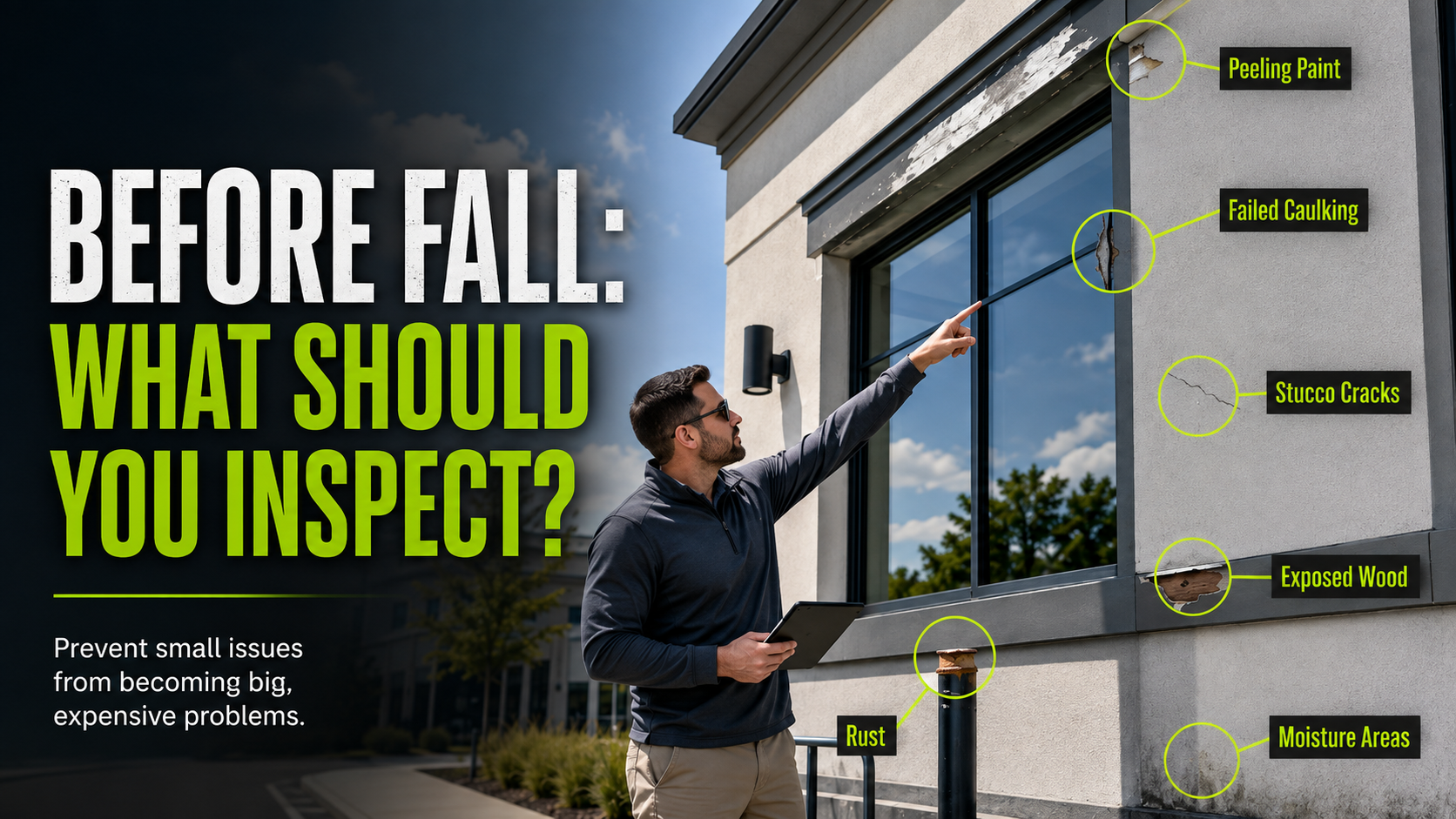
Fall and winter weather can expose weaknesses in a commercial building’s exterior quickly. Small areas of peeling paint, failed caulking, exposed wood, or surface deterioration that seem minor during dry summer months can become much more expensive problems once moisture enters the building envelope.
For property and facility managers, late summer is a good time to inspect exterior painted surfaces and address vulnerable areas before seasonal rain and cooler temperatures arrive.
The goal is not necessarily to repaint the entire property. It is to identify early warning signs, determine what needs attention now, and prevent minor coating failures from developing into larger maintenance issues.

1. Peeling, Flaking, or Blistering Paint
Peeling paint is one of the clearest signs that an exterior coating is beginning to fail.
Look closely around:
- Window and door frames
- Fascia and trim
- Rooflines
- Exterior doors
- Wood siding
- Areas regularly exposed to irrigation or runoff
Once paint separates from the surface, the material underneath loses an important layer of protection. On wood substrates especially, prolonged moisture exposure can contribute to swelling, deterioration, and eventually rot.
A few isolated areas may only require preparation and touch-up work. Widespread peeling, however, can indicate that the coating system is approaching the end of its useful life.
2. Cracked or Failed Caulking
Exterior caulking is easy to overlook, but it plays an important role in keeping water away from joints and gaps in the building.
Inspect caulking around:
- Windows
- Door frames
- Expansion joints
- Trim connections
- Utility penetrations
- Transitions between different building materials
Look for cracking, shrinking, separation, or missing sections.
Failed caulking can allow moisture to reach areas behind the painted surface. Replacing deteriorated sealant before wet weather arrives is often a relatively simple preventive-maintenance step compared with repairing moisture-related damage later.
3. Exposed Wood
Any area where bare wood is visible should receive attention.
Paint does more than improve appearance. A properly maintained exterior coating helps protect wood from repeated exposure to sunlight and moisture.
Property managers should pay particular attention to:
- Fascia boards
- Eaves
- Wood siding
- Exterior trim
- Railings
- Posts
- Decorative architectural elements
If exposed areas remain untreated through the rainy season, moisture can penetrate the wood and accelerate deterioration.
Early preparation, priming, and recoating can often extend the life of the substrate and reduce the likelihood of more extensive repairs.
4. Chalking and Fading
Run your hand across an exterior painted surface. If a powdery residue comes off onto your fingers, the coating may be chalking.
Some chalking naturally occurs as exterior paint ages, but excessive chalking can indicate significant coating degradation.
You may also notice:
- Uneven fading
- Loss of color
- Dull or weathered surfaces
- Different elevations aging at different rates
South- and west-facing elevations often receive greater sun exposure and may deteriorate faster than more protected areas.
Chalking does not always mean the building requires immediate repainting, but it is an important indicator to include when evaluating the remaining life of an exterior coating system.
5. Rust on Metal Surfaces
Rust should be addressed before it spreads.
Inspect painted metal components such as:
- Railings
- Bollards
- Gates
- Stair systems
- Metal doors and frames
- Structural steel
- Equipment screens
- Exterior piping
Small rust spots can spread beneath surrounding coatings once the protective finish has been compromised.
Proper maintenance generally requires more than simply painting over the rust. The affected area must be evaluated and prepared appropriately before the correct primer and finish system are applied.
Addressing corrosion while it is localized can help avoid more extensive surface preparation later.
6. Cracks and Damage in Stucco
Painted stucco should also be part of your exterior inspection.
Look for:
- Hairline cracks
- Larger cracks
- Chipped areas
- Bubbling or peeling coatings
- Staining
- Soft or deteriorated sections
- Previous patches beginning to fail
Cracks themselves are not all equal. Some may primarily be cosmetic, while others can allow water to enter the substrate.
Before repainting damaged stucco, the source and severity of the problem should be understood. Painting over an unresolved moisture or substrate issue usually provides only a temporary cosmetic improvement.
7. Moisture-Prone Areas
Some parts of a commercial property experience more moisture exposure than others and should receive additional attention before fall.
Check areas:
- Near downspouts
- Below roof drainage points
- Around landscaping and irrigation
- Along lower walls
- Around windows
- Beneath overhangs
- Near mechanical equipment
- Where water regularly collects or runs down the building
Look for discoloration, peeling paint, mildew-like growth, efflorescence, staining, or repeated coating failure.
If the same area continues to deteriorate after previous repairs, the issue may be related to drainage or moisture rather than the paint itself.
Identifying the underlying cause before recoating can prevent repeated maintenance.
Why Inspect Commercial Exteriors Before Fall?
Waiting until visible damage becomes severe can turn routine painting maintenance into a much larger repair project.
A proactive exterior inspection gives property managers time to:
- Identify coating failures while they are still manageable
- Protect exposed building materials
- Address caulking and waterproofing vulnerabilities
- Repair localized deterioration
- Budget for larger repainting projects
- Coordinate work before wetter weather creates scheduling challenges
It also helps distinguish between a property that needs a few targeted repairs and one that would benefit from a complete exterior repaint.
That distinction is important when planning maintenance budgets.
Repair Now or Plan a Full Repaint?
Not every defect means the building needs to be completely repainted.
Localized repairs may be appropriate when most of the coating remains in good condition and deterioration is limited to specific areas.
A larger repainting project may make more sense when you see widespread:
- Peeling or coating failure
- Significant fading or chalking
- Multiple exposed substrates
- Deteriorated caulking throughout the property
- Rust across numerous metal components
- Repeated patch repairs
- Inconsistent appearance from years of touch-ups
A professional exterior assessment can help determine which approach provides the best long-term value.
Make Exterior Painting Part of Preventive Maintenance
Commercial painting should not only happen when a building begins to look neglected.
Exterior coatings are part of the property's maintenance system. Regular inspections and timely repairs can help protect the surfaces underneath while maintaining the professional appearance tenants, visitors, and prospective occupants expect.
For commercial properties throughout
San Jose, Silicon Valley, and the Bay Area, late summer is an ideal opportunity to evaluate exterior conditions and determine what should be addressed before fall and winter weather arrives.
Schedule an Exterior Painting Assessment
Not sure whether your property needs touch-ups, repairs, or a complete repaint?
Commercial Painting Inc. works with property managers, facility managers, building owners, and commercial real estate teams throughout the Bay Area to evaluate exterior conditions and develop practical painting and maintenance plans.
Contact us to schedule a walkthrough and identify the areas that should be addressed before the next rainy season.
Contact Us
We will get back to you as soon as possible.
Please try again later.