

Planning Your 2027 Commercial Painting Projects: Why Fall Is the Time to Start
Fall is more than the start of cooler weather. For property managers and facility teams, it is also an important planning season.
As 2027 budgets begin taking shape, commercial painting projects should be evaluated alongside other capital improvements and preventive maintenance needs. Waiting until spring to start the conversation can mean rushed decisions, limited scheduling options, delayed approvals, and projects competing with other building priorities.
Starting in the fall gives your team time to inspect the property, define the scope, collect proposals, secure approvals, coordinate with tenants, and reserve a project window that works for your operation.
Here’s what property and facility managers should be doing now to prepare for commercial painting projects in 2027.
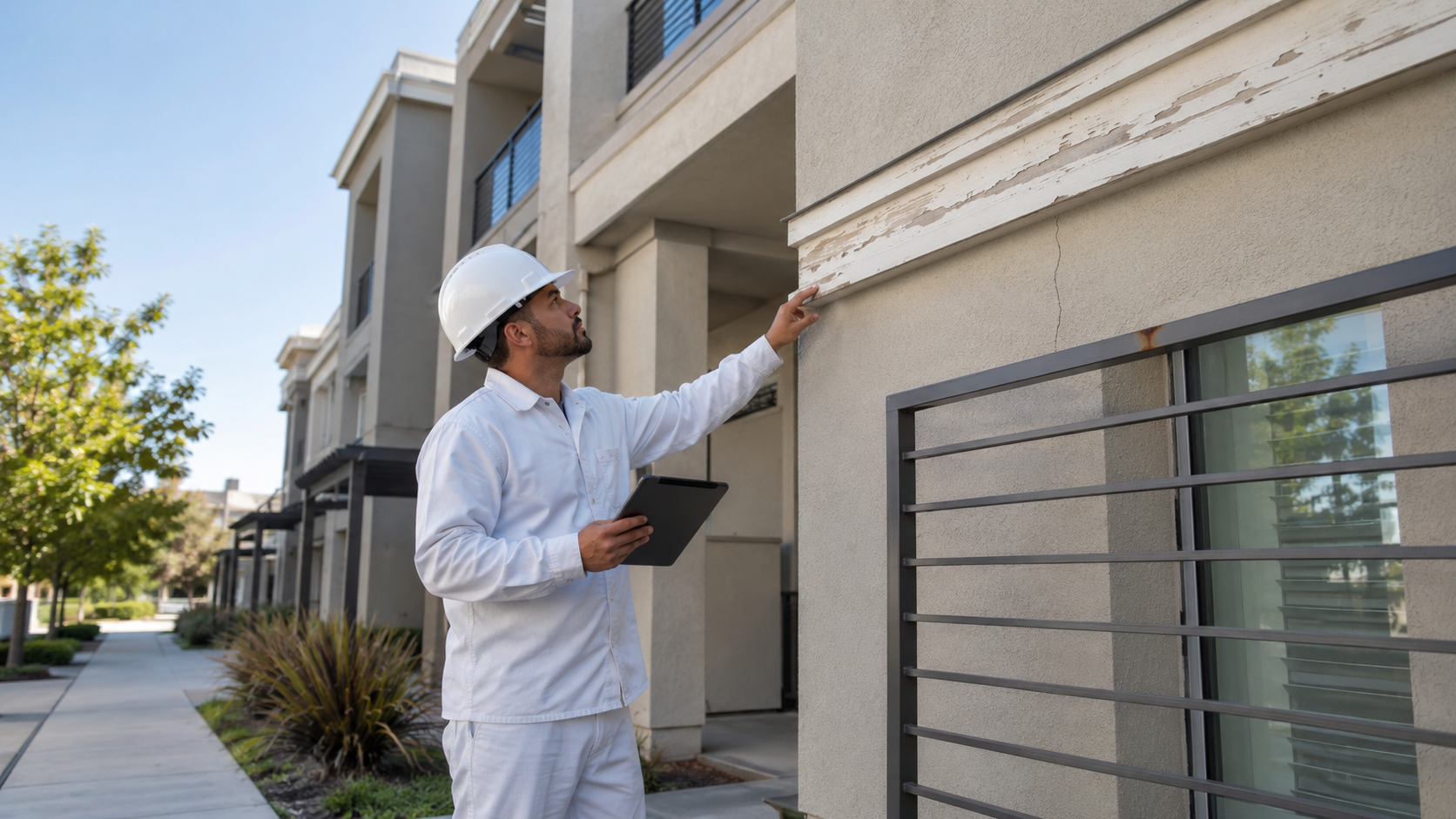
1. Inspect the Property Before Building the Budget
A good capital plan starts with understanding the current condition of the property.
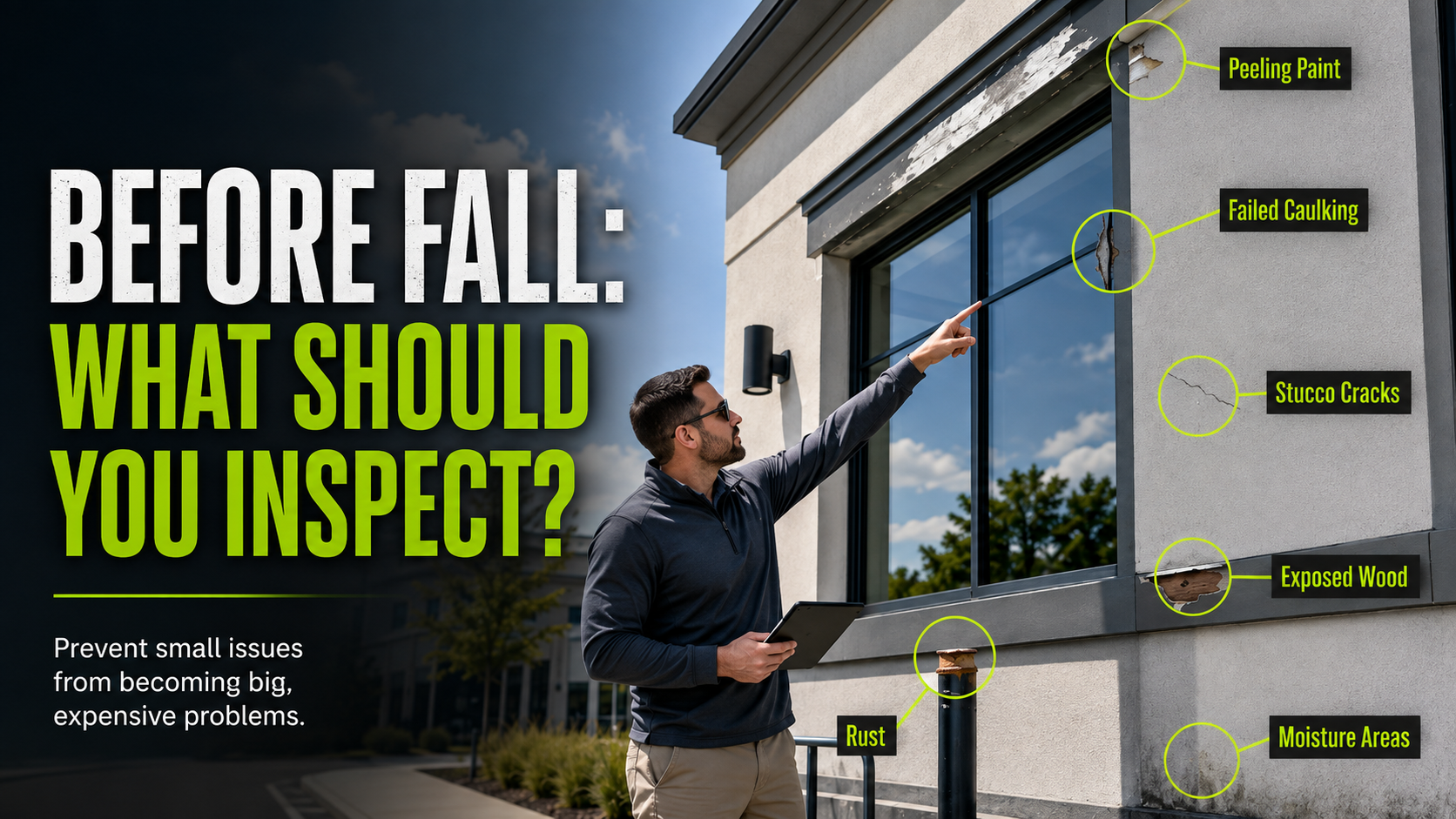
Walk the building and look for areas showing signs of coating failure or deterioration, including:
- Peeling, cracking, or flaking paint
- Faded or chalking exterior surfaces
- Cracked or deteriorated caulking
- Exposed wood or metal
- Rust or corrosion
- Stucco cracks or damaged surfaces
- Water staining or moisture-prone areas
- High-traffic interior areas with excessive wear
- Doors, railings, trim, and other components that may need attention
An inspection helps separate cosmetic improvements from maintenance items that may become more expensive if they are postponed.
For larger commercial properties, it can also help determine whether the entire building needs to be painted or whether the work can be divided into phases.
2. Establish a Realistic 2027 Painting Budget
Once the likely scope is identified, the next step is putting realistic numbers into the capital budget.
Commercial painting costs can vary significantly depending on factors such as building size, surface condition, access requirements, coatings, preparation, lifts or scaffolding, occupied spaces, and scheduling restrictions.
Getting preliminary pricing during the fall gives property managers better information for annual budgeting instead of relying on an outdated estimate or an arbitrary allowance.
It also creates time to adjust the scope.
For example, if painting the entire property is not practical within the 2027 budget, the project might be divided into priority areas or completed in phases over multiple budget cycles.
The goal is to make the painting plan fit the property's operational and financial priorities rather than making those decisions after the project already needs to begin.
3. Obtain Proposals Before the Spring Rush
Requesting proposals early provides another important advantage: time.
A detailed commercial painting proposal may require a site visit, measurements, assessment of existing coatings, evaluation of access, and conversations about scheduling and building operations.
Starting this process in the fall allows property managers to compare scopes carefully.
When reviewing proposals, don't look at price alone. Make sure contractors are pricing comparable work.
Review items such as:
- Surface preparation
- Areas included and excluded
- Coating systems and products
- Number of coats
- Access and equipment requirements
- Protection of surrounding surfaces
- Cleanup procedures
- Scheduling assumptions
- Warranty information
- Insurance and licensing requirements
Resolving these details early reduces the possibility of scope gaps, unexpected costs, or last-minute changes when the project begins.
4. Handle Color and Material Approvals Early
Color selection can take longer than expected, especially for larger properties.
A commercial repaint may require approval from ownership, asset management, an HOA board, tenants, architects, or other stakeholders.
There may also be questions about maintaining existing colors versus updating the property's appearance.
Starting early provides time for:
- Color consultations
- Physical samples
- Mockups
- Ownership or board review
- Tenant feedback when appropriate
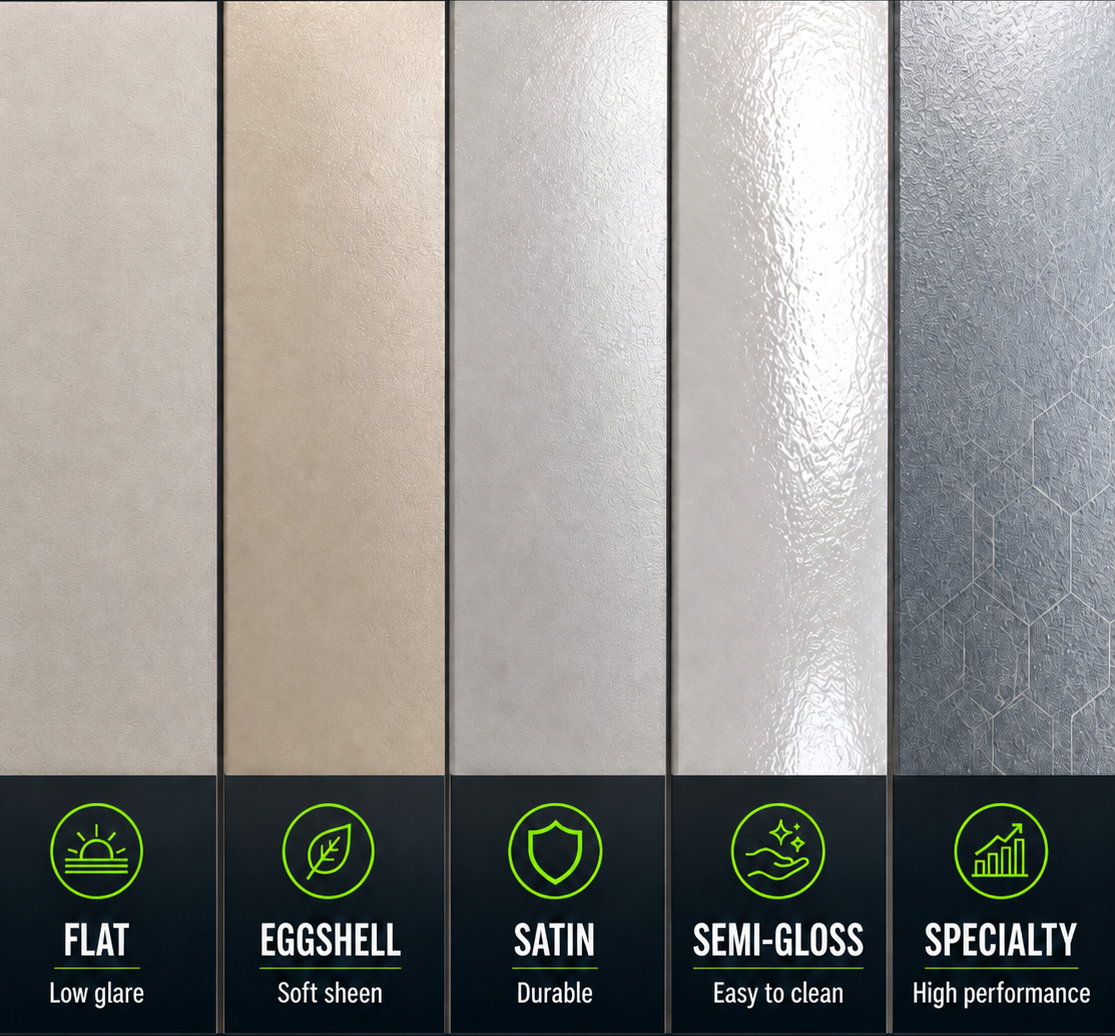
- Final coating and sheen selection
For properties with multiple decision-makers, getting these approvals completed months ahead can remove one of the most common causes of project delays.
5. Plan Around Tenants and Building Operations
For an occupied commercial property, the painting itself is only part of the project.
The schedule has to work around the people using the building.
Property managers may need to coordinate:
- Tenant notifications
- Building access
- After-hours or weekend work
- Parking restrictions
- Entrances and walkways
- Loading areas
- Noise-sensitive operations
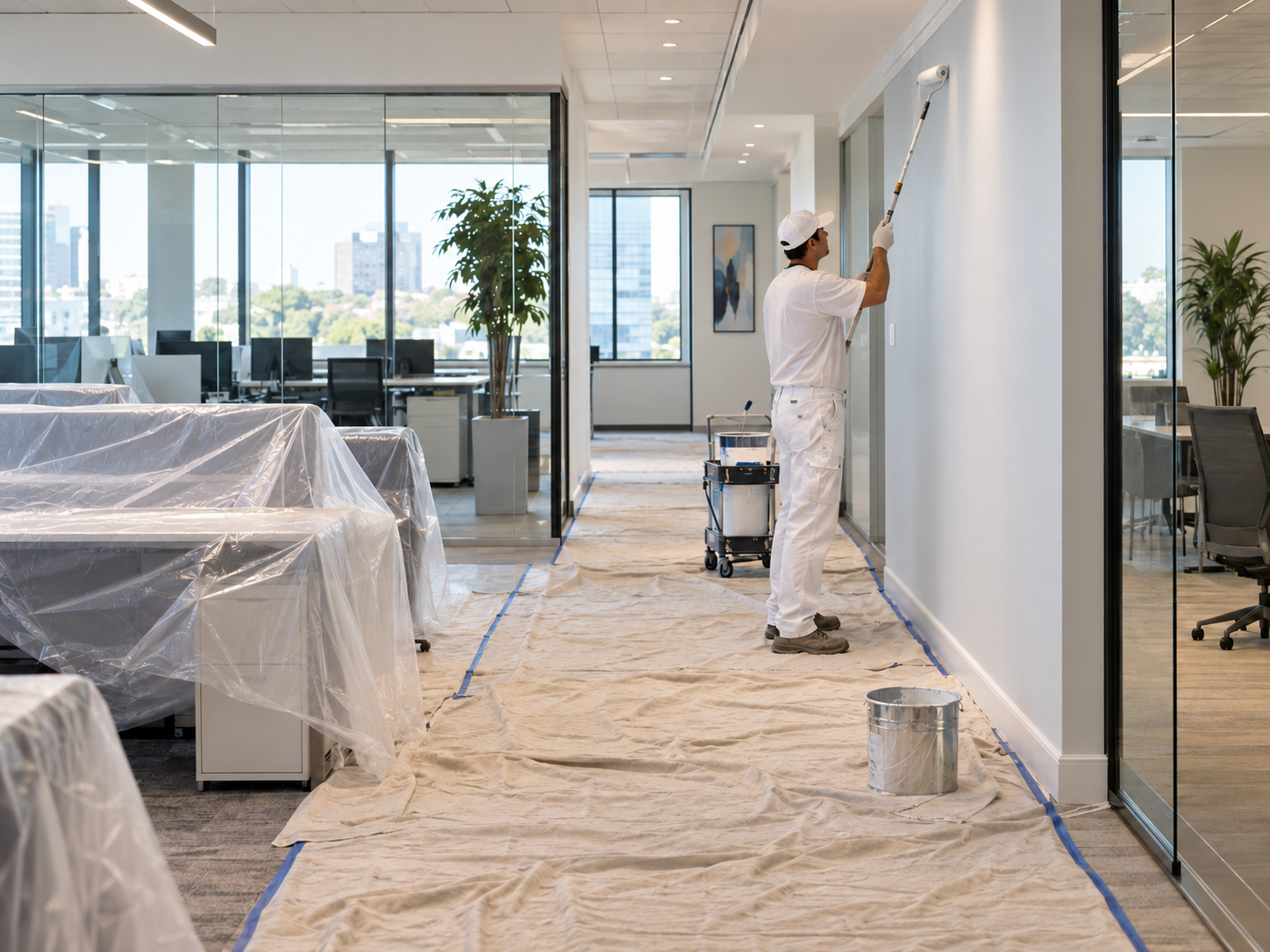
- Interior work around employees or customers
- Daily cleanup and reopening requirements
Planning these logistics in advance allows the contractor to build them into the project schedule rather than trying to solve them once work has already started.
For office buildings, retail centers, multifamily properties, schools, and other occupied facilities, this preparation can make a major difference in reducing disruption.
6. Reserve Your Preferred Project Window
One of the biggest reasons to plan ahead is scheduling.
Commercial painting calendars can fill quickly during preferred painting seasons, particularly for larger exterior projects.
If your property has a specific window—such as spring break, summer, a tenant turnover period, or a slower operational season—waiting until a few weeks before that date may significantly limit your options.
Planning in the fall gives you more flexibility to coordinate the project around your property's needs.
It also gives the painting contractor more time to prepare crews, equipment, materials, access plans, and other project requirements.
Instead of asking, "When can we fit this in?" the conversation becomes, "What is the best time to complete this project?"
A Better Approach to 2027 Capital Planning
Commercial painting is easier to manage when it is treated as planned asset maintenance rather than an emergency repair.
A strong 2027 painting plan should answer a few basic questions:
What needs attention?
Identify the areas showing deterioration or requiring an aesthetic refresh.
What is the priority?
Separate urgent maintenance from improvements that can be scheduled later.
What will it cost?
Obtain realistic pricing before finalizing the capital budget.
Who needs to approve it?
Identify ownership, management, tenant, board, or design approvals early.
When should the work happen?
Select a project window that minimizes disruption and provides appropriate working conditions.
How will occupants be affected?
Plan access, communication, containment, and work hours before mobilization.
Answering these questions during the fall gives your team time to make informed decisions without the pressure of an approaching project deadline.
Planning a Commercial Painting Project for 2027?
Fall is a good time to start evaluating next year's maintenance and capital improvement needs.
Commercial Painting Inc. works with property managers, facility teams, building owners, and commercial organizations throughout San Jose, Silicon Valley, and the greater Bay Area to plan interior and exterior painting projects around their properties and operations.
Whether your 2027 plan includes an exterior repaint, interior refresh, phased maintenance program, or a larger capital improvement project, starting the conversation early can make budgeting and scheduling easier.
Planning a commercial painting project for 2027? Contact Commercial Painting Inc. to schedule a site evaluation and begin building your project scope and budget.
Contact Us
We will get back to you as soon as possible.
Please try again later.